File this under "Early hate."
I don't think it's too much to ask that I at least be able to experience my first interview to write a book, even if I had no chance at all.
I figured I should have some shot, however remote, at being chosen to write Bicycling Australia's "Where to Ride Chicago". I'm sure there are many accomplished writers out there with a long resume full of books, but I do offer a unique, or so I thought, sweet-spot combination: I can write, I can ride, and who knows the city of Chicago from the vantage point of two wheels better than I?
I would've loved to at least presented my passion, to talk professionally about what I love for the chance at a life changing opportunity. Oh, well. By 4:15 as my phone was ringing while we carpooled home from work in growing snowfall, the publishers of Bicycling Australia had heard enough and had their author. It was far more painful than if I'd received that call after meeting them. I am beside myself, and they are sipping cocktails at Rosebud.
I should've at least had the chance. I know where to go. Let's rent a tandem. One ride. Come with me.
Let's start from Navy Pier, at the Bike Chicago rental.
We'll head down the path, snaking towards the Lakepoint Tower (look up, did you know Oprah and Eddie Van Halen lived there?) and the Illinois Street viaduct, and then north onto the lakefront path.
We'll pass Streeterville, named after the lunatic/rebel who crashed his boat on the lake shore in 1886 and claimed 186 acres as his own sovereign, the "District of Lake Michigan," until 1928.
Look up to your left as we ride through the Oak Street chicane, by the majestic waterfront apartments beneath the Palmolive Building. Once a beacon of the Art Deco 1930's and Chicago's rise to world prominence, alternatively synonymous with the the acrid smoke from the Tommy guns of Capone's legion, the rotating light at the top was finally shut down in 1981 after years of complaints from the residents of the next door John Hancock Tower and the defenders of migratory birds.
Let's head west at the North Avenue underpass, and ride into the shabby chic of Old Town, with it's well worn and comforting storefronts and entryways, the birthplace of Chicago's gentrification from the counterculture that once occupied the lakefront public space from Grant Park to Belmont Avenue during those hot August nights of 1968.
We'll take a right onto Wells Street, riding by the SNL nursery and ground-breaking Second City Theater, and then jog right/left to head north on Clark Street. Just north of Armitage you'll see an empty lot that was once a garage, where seven criminals, expecting no harm from the men dressed as cops behind them, leaned patiently by their hands against the wall and had their brains and guts spilt in a fury of semi-automatic gunfire onto the dusty floor by Al Capone's gang on February 14, 1929.
Let's turn left onto Fullerton and pass by the historic brownstones of Lincoln Park, once occupied by tenants of German brewery owners, and before that nuns of a seminary. Then north on Halsted, behind the Biograph Theater alley where John Dillinger was shot dead, and past the old Everleigh Sisters' northside franchise at 2447, later a hangout-slash-lair of occultist Alister Crowely (and my first apartment in Chicago). Ask the bartenders at Tonic Room to show you the pentagram on the basement floor.
Or alternately stay on Clark Street for a visit at the Weiner's Circle, if on a late night ride. Be sure and ask for the chocolate shake.
Either way, stay on or turn left back on to Clark when they intersect, and head northwest into Wrigleyville for a chance to have beer spilled down your shirt, or to tour the "cathedral" of baseball, home to the most cramped, rank, rat infested, and hated visitor's locker room in all the major leagues. Continue on up, past Metro, where Billy Corgan got his break and Cheap Trick never forgot their fans.
We'll head west, left on Irving Park, where at this intersection the entrances to Graceland and Wunders Cemeteries beckon to the graves of such prominent Chicagoan as Marshall Field, Tribune owner Col. Cyrus McCormick, and architects Ludwig Mies van der Rohe, Louis Sullivan, and Daniel Burnham, and last but not least, George Pullman.
At Irving and Ashland stands the monolithic Lakeview High School, a massive heap of brown brick topped with turrets where my grandmother graduated in the year 1922.
Just before Damen on the south side of the street is the Blue Stem lounge, a dingy martini joint where the late-night bartender shoots the extra cocktail that doesn't fit into each drink she serves, yet amazingly stays sober the entire night.
The traffic gets a little more aggressive here, so we'll turn northwest on Lincoln, and enjoy the confines of the bike lane again. At Montrose, be sure to stop and lock up the bike before scheduling some folk guitar lessons at the Old Town School of Music.
Park again in Lincoln Square between Wilson and Lawrence to take in vintage books, authentic German delis and of course the world famous Brauhaus (where one late Sunday night I found myself with my cousin alone save another table of Polish students calling out requests to the Polka band). See a second run movie at the Davis Theater, or grab the Capitalist Pig at Chubby Weiners (a hot dog with a bottle of Johnnie Walker Blue from the liquor store next next door).
Jog north and go west (young man) at Lawrence, but if it's the third Friday of the month, don't pass up the open house invite to the bar at Dankhaus, the German Cultural Center. Further down, back in the bike lane, you are treated to signs written in every language from Slovakian to Korean and offered both latkes and fishballs (and everything in between - from gold rims to wholesale underpants) at seemingly every storefront. If you're going to stop, make sure it's at Great Sea Chinese, just east of Kimball.
We'll keep going to Elston and take a right, heading back northwest, into the Mayfair Historic Bungalow District, although mostly all you can see from here is autobody and machine shops. A nice sidetrip would be southwest to Wilson and Knox, for a Guinness at the Irish American Heritage Center, and then some post-drinking fries at Susie's Drive-In, or maybe karaoke at Sidekicks.
A pretty good (and massive) Italian beef can be found at Dukes, up further at Central, and there are many working class bars on the way to the city limit at Devon where we can find both a stool and an ear to lean on.
Right at the end is my personal jewel, Superdawg, with the green tomato in the box on top of your sausage and fries. Pair it with an ice cold strawberry milk shake, and a slight breeze cooling the sweat off the back of your neck on a hot summer's night under the sunset, and you might think yourself in heaven.
Across the street is only Niles however, and the very beginning of the North Branch Trail. Now, on to the botanic gardens...
Showing posts with label The Hidden Side of Chicago's Bike Routes. Show all posts
Showing posts with label The Hidden Side of Chicago's Bike Routes. Show all posts
8.12.09


11.9.08
The Hidden Side of Chicago's Bike Routes: The Graveyards of Clark Street
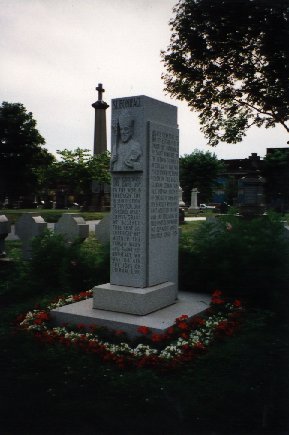 Across the street from Rainbo Gardens is St. Boniface Cemetery, a silent sentinel to all of its tumultuous changes since 1863 - originally far north of city limits. I can attest that a walk through it at midnight is enlightening to your sense of the breadth of Chicago's history. The 12 foot high brick walls can be a challenge to get over, but alcohol does help.
Pedal a half-mile down to Montrose and you will find the much more famous Graceland Cemetery, dedicated in 1860. The bodies of the original cemetery were moved from the earlier location along the lakefront in Lincoln Park, near where the Chicago Historical Society now stands. As the city grew more crowded, concerns of water-bourne diseases such as colera grew with it, and the cemetery was deemed a health hazard.
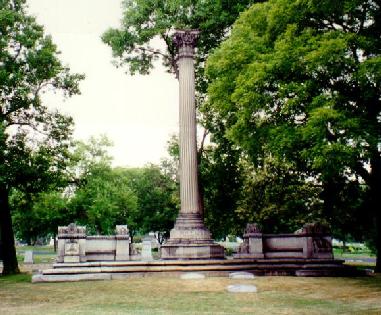 Graceland easily has more that its fair share of famous Chicagoans intered there, including Marshall Field, Tribune owner Col. Cyrus McCormick, and architects Ludwig Mies van der Rohe, Louis Sullivan, and Daniel Burnham, not mention George Pullman (right).
Across the street from Graceland's south end at Irving Park is Wunder's Cemetery, a much smaller Protestant burial ground. Even older than it's compatriots, Wunder's was founded in 1859; it's most striking feature is the caretaker's house at the corner of Irving Park and Clark Street. It is seperated from Jewish Graceland Cemetery by a chain link fence, just to the south.
1.7.08
The Hidden Side of Chicago's Bike Routes: Uptown and Rainbo Gardens
Moving south down Clark Street, through the heart of Uptown, the gentrification taking place in one of the Northside Chicago's last great “dirty” neighborhoods is hard to ignore.
Once lined with filthy bodegas, run-down body shops, greasy taquieras, roach infested Laundromats, and grubby whole-sale outlets filled with sweat-shop clothes, change is sweeping through like a firehose blast. There are now 6 sushi restaurants in the three-quarters of a mile between Winnemac and Bryn Marr. The African and Arabic restaurants are now gourmet wine shops and pet boutiques, gay gyms and lesbian bookstores predominate, and the Hopleaf is featured on Check Please at least twice a month by some Trixie who was finally convinced to venture north of Irving Park for the first time in her life. Once a low-key, secret-spot for the cool-kid-beer-snob set, you can’t even get a booth in there on a Tuesday night anymore.
As implied above, I have mixed feelings about Uptown’s transformation, as do many people. Take for instance, my first trip to the Green Mill in 1997; I’d moved to Chicago the week before. I’m glad that the sight of the woman taking a shit in the middle of Lawrence Avenue across from the Red Line station is not likely to be experienced by another newcomer, at least for the time being. But, hanging out at the Saxony Lounge, now the Uptown Lounge, and laughing about that sight over a 75 cent Pabst while waiting for the cover charge at the Green Mill to go down will also never be experienced again, either.
Yet, as Uptown is coming out of a long dormant period as one of the Northside’s rougher areas, some things about the neighborhood will never change, in both ways good and bad. The country bar, Carol’s - a mecca for Gulf War vets and hipters alike, is still on the corner of Clark and Leland, across the street from a brand-new bank branch. The Green Mill, the Aragon, and the Riviera will hopefully be there for a long time, and someday the Uptown Theater will join them once again. And as long as Alderman Helen Shiller keeps the rehab and section 8 housing prominent, it will always be a somewhat grubby place.

However, one of the most tragic losses - historically speaking - for the neighborhood was The Rainbo. If you lived in Uptown before 2003, you might have known the Rainbo, at 4812 N. Clark Street, very well. In its final days it was a pretty fun hipster hangout: a late night roller rink and the original venue for the Kinetic Playground, now a half-mile east, just past the Lawrence Red Line Station. It was well known for its annual New Years Eve bash, featuring well-known nationally touring acts, including G. Love and Special Sauce.
The rock music legacy of Rainbo and the name Kinetic Playground goes much farther back in time, however. In 1968, three partners opened the “Electric Theater” for a show on April 5th, 1968, the day after Martin Luther King was assassinated. In spite of the citywide curfew, attendance was strong that night. However, soon a copyright feud erupted with a club of the same name in New York, and the owners were forced to change the name. Over the years, such names as The Small Faces, The Who, The Grateful Dead, Jetro Tull, Frank Zappa, and even Led Zeppelin performed at the venue.
Still earlier, you would’ve found Olympic hopefuls and the 1961 Stanley Cup Champion Chicago Blackhawks training on the ice-skating rink that was installed 1957. It also housed a professional bowling alley.
Prior to this era, and the urban blight which completely desiccated Uptown beginning in the late 50’s, Rainbo’s legacy was just as, if not more colorful.

Originally a railhouse on the outskirts of the city in the 1890’s, the structure went through several expansions, including a stint as a very popular outdoor music garden called Moulin Rouge Gardens, fashioned after it’s namesake in Paris, before being bought and reopened as Mann’s Rainbo Room, in 1921. Musical acts featured there through the first part of the Twentieth Century included Ruth Etting, Isham Jones, Frank Westphal, Ralph Williams, and Sam Wagner. It was here that Ted (Curly) Healy and Moe Howard asked Larry Fine to join their comedy act.
Despite all that talent, Rainbo had a difficult time during Prohibition, turning a blind eye to smuggled-in liquor, and running illicit gambling operations. Fronted by a newly installed sports arena in 1927 that featured vaudville, jai-alai, boxing, and wrestling matches, Rainbo was raided several times by federal authorities from 1920 – 1928, eventually resulting in a shut down in that year, and the owner brought up on gambling charges.
Reopened in 1929, the hard times continued through the depression. Its draw mostly came from the jai-alai and boxing matches, as well as continued gambling and vaudeville at the indoor casino - reopened as the “French Casino” during the 1933 World’s Fair. The Chicago mob exerted a fair amount of control over the establishment, via the Nitti Gang (John Dillinger spent his birthday there in 1934, the day before he was killed by G-men). It was shut down in the early 1930’s for selling liquor to minors and wouldn’t reopen again until after World War II, again featuring wrestling matches, largely in ignominy as Uptown began its slow decline into urban decay.
Today, 5 years after being destroyed for condos, Rainbo Gardens exists partly in name only, as Rainbo Village. A completely modern complex, it is still surrounded by much of the grubbiness of the earlier years, although even that is slowly being spit-shined by the gradual march north of Chicago’s up-and-comers.

Tip a hat to the Rainbo as you pedal past, and every once in a while, give more than a passing thought to what it once was.
Sources:
chicago.urban-history.org
wiki.answers.com
uptownhistory.compassrose.org
wikipedia.org
uptownupdate.com
Once lined with filthy bodegas, run-down body shops, greasy taquieras, roach infested Laundromats, and grubby whole-sale outlets filled with sweat-shop clothes, change is sweeping through like a firehose blast. There are now 6 sushi restaurants in the three-quarters of a mile between Winnemac and Bryn Marr. The African and Arabic restaurants are now gourmet wine shops and pet boutiques, gay gyms and lesbian bookstores predominate, and the Hopleaf is featured on Check Please at least twice a month by some Trixie who was finally convinced to venture north of Irving Park for the first time in her life. Once a low-key, secret-spot for the cool-kid-beer-snob set, you can’t even get a booth in there on a Tuesday night anymore.
As implied above, I have mixed feelings about Uptown’s transformation, as do many people. Take for instance, my first trip to the Green Mill in 1997; I’d moved to Chicago the week before. I’m glad that the sight of the woman taking a shit in the middle of Lawrence Avenue across from the Red Line station is not likely to be experienced by another newcomer, at least for the time being. But, hanging out at the Saxony Lounge, now the Uptown Lounge, and laughing about that sight over a 75 cent Pabst while waiting for the cover charge at the Green Mill to go down will also never be experienced again, either.
Yet, as Uptown is coming out of a long dormant period as one of the Northside’s rougher areas, some things about the neighborhood will never change, in both ways good and bad. The country bar, Carol’s - a mecca for Gulf War vets and hipters alike, is still on the corner of Clark and Leland, across the street from a brand-new bank branch. The Green Mill, the Aragon, and the Riviera will hopefully be there for a long time, and someday the Uptown Theater will join them once again. And as long as Alderman Helen Shiller keeps the rehab and section 8 housing prominent, it will always be a somewhat grubby place.

However, one of the most tragic losses - historically speaking - for the neighborhood was The Rainbo. If you lived in Uptown before 2003, you might have known the Rainbo, at 4812 N. Clark Street, very well. In its final days it was a pretty fun hipster hangout: a late night roller rink and the original venue for the Kinetic Playground, now a half-mile east, just past the Lawrence Red Line Station. It was well known for its annual New Years Eve bash, featuring well-known nationally touring acts, including G. Love and Special Sauce.
The rock music legacy of Rainbo and the name Kinetic Playground goes much farther back in time, however. In 1968, three partners opened the “Electric Theater” for a show on April 5th, 1968, the day after Martin Luther King was assassinated. In spite of the citywide curfew, attendance was strong that night. However, soon a copyright feud erupted with a club of the same name in New York, and the owners were forced to change the name. Over the years, such names as The Small Faces, The Who, The Grateful Dead, Jetro Tull, Frank Zappa, and even Led Zeppelin performed at the venue.
Still earlier, you would’ve found Olympic hopefuls and the 1961 Stanley Cup Champion Chicago Blackhawks training on the ice-skating rink that was installed 1957. It also housed a professional bowling alley.
Prior to this era, and the urban blight which completely desiccated Uptown beginning in the late 50’s, Rainbo’s legacy was just as, if not more colorful.

Originally a railhouse on the outskirts of the city in the 1890’s, the structure went through several expansions, including a stint as a very popular outdoor music garden called Moulin Rouge Gardens, fashioned after it’s namesake in Paris, before being bought and reopened as Mann’s Rainbo Room, in 1921. Musical acts featured there through the first part of the Twentieth Century included Ruth Etting, Isham Jones, Frank Westphal, Ralph Williams, and Sam Wagner. It was here that Ted (Curly) Healy and Moe Howard asked Larry Fine to join their comedy act.
Despite all that talent, Rainbo had a difficult time during Prohibition, turning a blind eye to smuggled-in liquor, and running illicit gambling operations. Fronted by a newly installed sports arena in 1927 that featured vaudville, jai-alai, boxing, and wrestling matches, Rainbo was raided several times by federal authorities from 1920 – 1928, eventually resulting in a shut down in that year, and the owner brought up on gambling charges.
Reopened in 1929, the hard times continued through the depression. Its draw mostly came from the jai-alai and boxing matches, as well as continued gambling and vaudeville at the indoor casino - reopened as the “French Casino” during the 1933 World’s Fair. The Chicago mob exerted a fair amount of control over the establishment, via the Nitti Gang (John Dillinger spent his birthday there in 1934, the day before he was killed by G-men). It was shut down in the early 1930’s for selling liquor to minors and wouldn’t reopen again until after World War II, again featuring wrestling matches, largely in ignominy as Uptown began its slow decline into urban decay.
Today, 5 years after being destroyed for condos, Rainbo Gardens exists partly in name only, as Rainbo Village. A completely modern complex, it is still surrounded by much of the grubbiness of the earlier years, although even that is slowly being spit-shined by the gradual march north of Chicago’s up-and-comers.

Tip a hat to the Rainbo as you pedal past, and every once in a while, give more than a passing thought to what it once was.
Sources:
chicago.urban-history.org
wiki.answers.com
uptownhistory.compassrose.org
wikipedia.org
uptownupdate.com
20.6.08
The Hidden Side of Chicago's Bike Routes: Essanay Studios
A major thoroughfare for Chicago cyclists to and from the Northside is Clark Street. Affording a direct route to downtown or easy access to the Lake Front Trail, more bikers use this route than almost any other route in the city.
Built over an existing Native-American trail (as were many streets in Chicago, such as Milwaukee Avenue and Broadway), Clark Street runs the gamut of Windy City Existence. From gritty Howard Street at the Evanston border, it meanders diagonally down through the emergent neighborhoods of Rogers Park, Edgewater and Uptown, becomes clogged with cargo-shorts, summer dresses and spilt beer in the arrested-development paradise of Wrigleyville, Lakeview, and Lincoln Park, then straightens out to soak in the ritzy and well-established glamour that is The Gold Coast, before hulking up and heading down past City Hall and the Man On Five, through Southloop, and finally ending back in the grit and dust of the public housing and warehouses just east of Chinatown.
Obviously, there is quite a bit of history to be found on Clark Street’s trajectory. From former speakeasies to mob hits, landmark buildings to famous homeruns, Clark is a time-capsule of Chicago’s life.
As I mentioned in the last installment, Edgewater, in particular, attracted its fair share of celebrity during the far-Northside’s early years, and not-at-all due entirely to the aforementioned Edgewater Beach Hotel. Amazingly, one the most prodigious movie producers during the Silent Era was set right in nearby Uptown, just east of Clark Street, at 1333-45 W. Argyle Street.
View Larger Map

Essanay Studios is probably most famous for making the films that turned Charlie Chaplin into a star, including “The Tramp,” “Shanghaied,” and “Police.” It also, however, produced the first American “Sherlock Holmes” and the first-ever film version of “A Christmas Carol.”

Essanay is formed out of the two letters, S and A, after the company’s founders, the George K Spoor and Brocho Billy Anderson. These two men lured Chaplin away from the Keystone Studios and gave him the boost that launched his career. In addition to the 14 movies Chaplin made with Essanay in 1915, the studio made over 1400 movies from 1907 to 1917. This included almost 300 Broncho Billy Westerns, and the usage of addition studios in Niles, Colorado, and California.
Chaplin left Essanay after only one year for a larger contract on the back of his newfound fame, and the emptiness left by his departure caused a rift between Spoor and Anderson that eventually led to the studio’s closure in 1917.
Today, the building is home to St. Augustine College.
Sources: wikipedia, IMDb, Totavid.com
Built over an existing Native-American trail (as were many streets in Chicago, such as Milwaukee Avenue and Broadway), Clark Street runs the gamut of Windy City Existence. From gritty Howard Street at the Evanston border, it meanders diagonally down through the emergent neighborhoods of Rogers Park, Edgewater and Uptown, becomes clogged with cargo-shorts, summer dresses and spilt beer in the arrested-development paradise of Wrigleyville, Lakeview, and Lincoln Park, then straightens out to soak in the ritzy and well-established glamour that is The Gold Coast, before hulking up and heading down past City Hall and the Man On Five, through Southloop, and finally ending back in the grit and dust of the public housing and warehouses just east of Chinatown.
Obviously, there is quite a bit of history to be found on Clark Street’s trajectory. From former speakeasies to mob hits, landmark buildings to famous homeruns, Clark is a time-capsule of Chicago’s life.
As I mentioned in the last installment, Edgewater, in particular, attracted its fair share of celebrity during the far-Northside’s early years, and not-at-all due entirely to the aforementioned Edgewater Beach Hotel. Amazingly, one the most prodigious movie producers during the Silent Era was set right in nearby Uptown, just east of Clark Street, at 1333-45 W. Argyle Street.
View Larger Map

Essanay Studios is probably most famous for making the films that turned Charlie Chaplin into a star, including “The Tramp,” “Shanghaied,” and “Police.” It also, however, produced the first American “Sherlock Holmes” and the first-ever film version of “A Christmas Carol.”

Essanay is formed out of the two letters, S and A, after the company’s founders, the George K Spoor and Brocho Billy Anderson. These two men lured Chaplin away from the Keystone Studios and gave him the boost that launched his career. In addition to the 14 movies Chaplin made with Essanay in 1915, the studio made over 1400 movies from 1907 to 1917. This included almost 300 Broncho Billy Westerns, and the usage of addition studios in Niles, Colorado, and California.
Chaplin left Essanay after only one year for a larger contract on the back of his newfound fame, and the emptiness left by his departure caused a rift between Spoor and Anderson that eventually led to the studio’s closure in 1917.
Today, the building is home to St. Augustine College.
Sources: wikipedia, IMDb, Totavid.com
9.6.08
The Hidden Side of Chicago's Bike Routes: The Edgewater Beach Hotel
Nothing quite stands out like pink.
It catches your eye like a glint of sunlight off someone's watch. Especially when surrounded by dull colors of slate and gray and steel and black. Pink is the color that says, “Look at me! I’m super fabulous! Thanks for asking!”
So it is fitting that among all of Chicago’s lakefront, among all that mishmash of grey brick and black steel, of glass and brownstone, of turn-of-the-century masterpieces and the birth of modernist architecture, there is but one, sole, pink building. And it announces brightly, loudly, the north end of the Lakefront Trail.

The Edgewater Beach Apartments stands tall and proud at Bryn Mayr and Sheridan, carrying on the optimism of a bygone age, holding out for a neighborhood's distinctiveness against encroaching homogenization, with the echoes of Tommy Dorsey’s band and the happy shouts of celebrities and movie stars still reverberating within its hallways.
It was once a twin of a second building just to the south, and together they were the Edgewater Beach Hotel. A resort of sorts, it was a destination for the many rich and famous who visited Chicago from the Roaring Twenties through the war years and beyond. The building that is still standing, the pink Apartments, was built in 1927 as an expansion to the hotel. The original 400-room building, in Spanish-style stucco in the form of a Maltese Cross, was constructed in 1916 and stood where the black, monolithic condominium now dominates the northshore skyline.


The hotel was a victim of Chicago’s success, as the expansion of Lake Shore Drive from Foster northward in mid-1950’s removed the beach front, and the advent of television and air-conditioning further drove away the hotel’s clientele. The quality of service steadily declined as well with the sale of the original owners’ interest in the late ‘40s, and by 1967, the hotel had closed.
But in its heyday, the Edgewater Beach Hotel was the place to be and be seen in Chicago, and truly set the northside lakefront apart. It featured such national acts as Tommy Dorsey’s band, and you might have seen Bette Davis or Marilyn Monroe, Babe Ruth or Lou Gehrig. Hotel manager William Dewey had a knack for booking top acts at the Edgewater, and all that talent and celebrity drove the allure of the Hotel and gave the now Historic Bryn Mawr District it’s name.
We're going to pull off the path now, and head into Chicago's neighborhoods and take a closer look at some of our favorite urban routes. So be sure and get a closer look at Edgewater while you're here. Stop in at Johnny Sprocket's Bike Shop for a quick tune up, grab a massive bleu-burger and take in the anti-Wicker scene at Moody's, sample some fair-trade coffee and attentive service at Metropolis, or experience the last vestiges of the area's Jewish heritage with a Reuben at the Bryn Mawr Deli.
Sources: Wikipedia.org, WTTW
It catches your eye like a glint of sunlight off someone's watch. Especially when surrounded by dull colors of slate and gray and steel and black. Pink is the color that says, “Look at me! I’m super fabulous! Thanks for asking!”
So it is fitting that among all of Chicago’s lakefront, among all that mishmash of grey brick and black steel, of glass and brownstone, of turn-of-the-century masterpieces and the birth of modernist architecture, there is but one, sole, pink building. And it announces brightly, loudly, the north end of the Lakefront Trail.

The Edgewater Beach Apartments stands tall and proud at Bryn Mayr and Sheridan, carrying on the optimism of a bygone age, holding out for a neighborhood's distinctiveness against encroaching homogenization, with the echoes of Tommy Dorsey’s band and the happy shouts of celebrities and movie stars still reverberating within its hallways.
It was once a twin of a second building just to the south, and together they were the Edgewater Beach Hotel. A resort of sorts, it was a destination for the many rich and famous who visited Chicago from the Roaring Twenties through the war years and beyond. The building that is still standing, the pink Apartments, was built in 1927 as an expansion to the hotel. The original 400-room building, in Spanish-style stucco in the form of a Maltese Cross, was constructed in 1916 and stood where the black, monolithic condominium now dominates the northshore skyline.

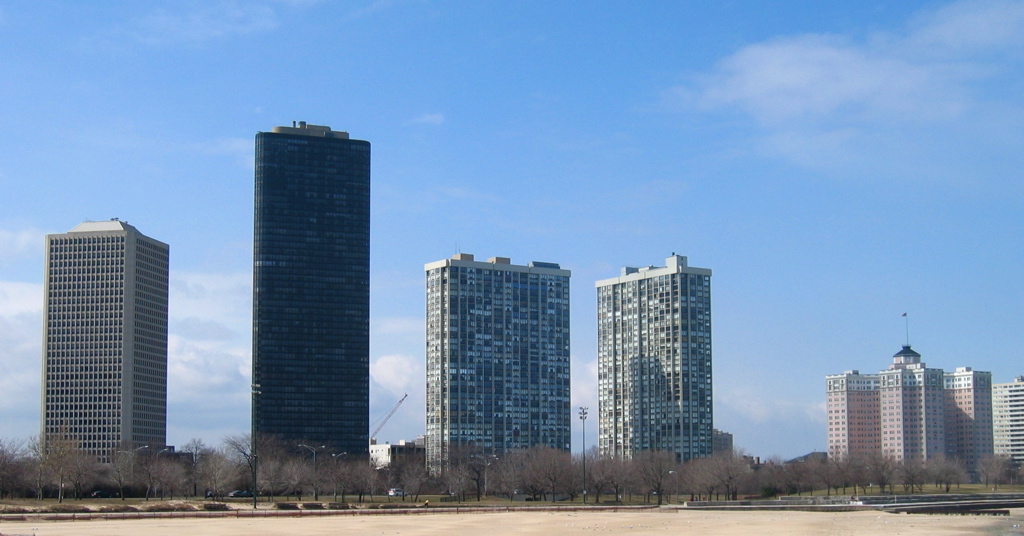
The hotel was a victim of Chicago’s success, as the expansion of Lake Shore Drive from Foster northward in mid-1950’s removed the beach front, and the advent of television and air-conditioning further drove away the hotel’s clientele. The quality of service steadily declined as well with the sale of the original owners’ interest in the late ‘40s, and by 1967, the hotel had closed.
But in its heyday, the Edgewater Beach Hotel was the place to be and be seen in Chicago, and truly set the northside lakefront apart. It featured such national acts as Tommy Dorsey’s band, and you might have seen Bette Davis or Marilyn Monroe, Babe Ruth or Lou Gehrig. Hotel manager William Dewey had a knack for booking top acts at the Edgewater, and all that talent and celebrity drove the allure of the Hotel and gave the now Historic Bryn Mawr District it’s name.
We're going to pull off the path now, and head into Chicago's neighborhoods and take a closer look at some of our favorite urban routes. So be sure and get a closer look at Edgewater while you're here. Stop in at Johnny Sprocket's Bike Shop for a quick tune up, grab a massive bleu-burger and take in the anti-Wicker scene at Moody's, sample some fair-trade coffee and attentive service at Metropolis, or experience the last vestiges of the area's Jewish heritage with a Reuben at the Bryn Mawr Deli.
Sources: Wikipedia.org, WTTW
22.5.08
The Hidden Side of Chicago's Bike Routes: The Balbo Monument
Sure, he talked tough. But he made people feel good about themselves, and he made the trains run on time, right?
Fascism was pretty fashionable at one time, before all that war got in the way. And with such a sizable and influential Italian population at the time, Chicago was grateful for the recognition.
"CW...what the hell are you talking about?" I imagine some of you are asking.
 Most people barely notice the nondescript white pillar that stands along the bike path as it snakes past the eastern side of Soldier Field through Burnham Park , let alone stop to actually read the inscription on its base:
Ah, the world's fair was in Chicago in 1933! "The Century of Progress."
Indeed.
Italo Balbo, Mussolini's Air Marshal, arrived to enthusiastic crowds in Chicago that summer in 1933, July 15th, and the column, dedicated to his visit and to Chicago, was unveiled the next year in front of the Italian pavilion at the Fair.
This little historical gem has been hidden from Chicago's eyes for the better part of the time since it's installation. It's roots have probably kept most of the spotlight away in the first place. As well, Chicago's bike path has experienced a renaissance of sorts in the last ten years only, and that particular stretch of path has seen much new construction - even now, as I write this - on the path itself, and during the rebuilding of Soldier Field.
It is interesting to note that the major sponsors of the "Century of Progress" that year were the American automobile companies, specifically General Motors and Ford. Both of which were open supporters of fascism, and Hitler in particular, even through the start of the war.
It has even been alleged that these companies and their leaders, among others, conspired to overthrow the government of the United States during these years. Whatever the conjecture, the historical record of the McCormack-Dickstein Committee does attest to the fact that two-time Medal of Honor winner Smedley Darlington Butler went to Congress with an incredible story that has led to much conspiracy-theorizing ever since.
For whatever reason, the Balbo Monument was never removed - to our benefit, in my opinion. And it has endured, although largely unnoticed, along the lakefront through the tumultuous times of Chicago's history.
Please give it a second look the next time you pass.
Fascism was pretty fashionable at one time, before all that war got in the way. And with such a sizable and influential Italian population at the time, Chicago was grateful for the recognition.
"CW...what the hell are you talking about?" I imagine some of you are asking.
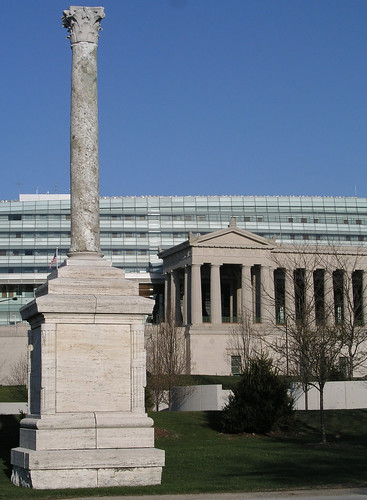 Most people barely notice the nondescript white pillar that stands along the bike path as it snakes past the eastern side of Soldier Field through Burnham Park , let alone stop to actually read the inscription on its base:
That's right. The dictator of fascist Italy gave this innocuous little obelisk as a gift to the City of Chicago...when? Let's see here..."the 11th year of the fascist era..." Fascism is considered to have become "official" when Italy crossed over that line in 1922, so that would date this little present to 1933.QUESTA COLONNA
DI VENTI SECOLI ANTICA
ERETTA SUL LIDO DI OSTIA
PORTO DI ROMA IMPERIALE
A VIGILARE LE FORTUNE E LE VITTORIE
DELLE TIREMI ROMANE
L'ITALIA FASCISTA SUSPICE BENITO MUSSOLINI
DONA A CHICAGO
ESALTAZIONE SIMBOLO RICORDO
DELLA SQUADRA ATLANTICA GUIDATA DA BALBO
CHE CON ROMANO ARDIMENTO TRASVOLO L'OCEANO
NELL' ANNO XI
DEL LITTORIO
And also inscribed is the translation:THIS COLUMN
TWENTY CENTURIES OLD
ERECTED ON THE SHORES OF OSTIA
PORT OF IMPERIAL ROME
TO SAFEGUARD THE FORTUNES AND VICTORIES
OF THE ROMAN TRIREMES
FASCIST ITALY BY COMMAND OF BENITO MUSSOLINI
PRESENTS TO CHICAGO
EXALTATION SYMBOL MEMORIAL
OF THE ATLANTIC SQUADRON LED BY BALBO
THAT WITH ROMAN DARING FLEW ACROSS THE OCEAN
IN THE ELEVENTH YEAR
OF THE FASCIST ERA
Ah, the world's fair was in Chicago in 1933! "The Century of Progress."
Indeed.
Italo Balbo, Mussolini's Air Marshal, arrived to enthusiastic crowds in Chicago that summer in 1933, July 15th, and the column, dedicated to his visit and to Chicago, was unveiled the next year in front of the Italian pavilion at the Fair.
This little historical gem has been hidden from Chicago's eyes for the better part of the time since it's installation. It's roots have probably kept most of the spotlight away in the first place. As well, Chicago's bike path has experienced a renaissance of sorts in the last ten years only, and that particular stretch of path has seen much new construction - even now, as I write this - on the path itself, and during the rebuilding of Soldier Field.
It is interesting to note that the major sponsors of the "Century of Progress" that year were the American automobile companies, specifically General Motors and Ford. Both of which were open supporters of fascism, and Hitler in particular, even through the start of the war.
It has even been alleged that these companies and their leaders, among others, conspired to overthrow the government of the United States during these years. Whatever the conjecture, the historical record of the McCormack-Dickstein Committee does attest to the fact that two-time Medal of Honor winner Smedley Darlington Butler went to Congress with an incredible story that has led to much conspiracy-theorizing ever since.
For whatever reason, the Balbo Monument was never removed - to our benefit, in my opinion. And it has endured, although largely unnoticed, along the lakefront through the tumultuous times of Chicago's history.
Please give it a second look the next time you pass.
15.5.08
The Hidden Side of Chicago's Bike Routes: The House of Bing
When I first started riding in Chicago, the "everyday" rides were less than ten miles...from where I lived in Andersonville to maybe Diversey and back. The longer rides would take me a day just to plan. 30 miles was an event. I'd even make a couple sandwiches. It would take me at least 90 minutes to reach Promontory Point. I'd take my lunch and book and spend half the day getting there and then staying there, relaxing on the green lawn and reading or napping.
My first ride to Kenosha turned out to be a journey of Columbian proportions. I set out one Saturday morning, Memorial Day Weekend, in 2004, with one Clif Bar and no rain gear. I almost called them from the Great Lakes station, but 6 hours later, soaked and shivering, I pulled into my Aunt and Uncle's house and promptly fell asleep for 4 more hours.
Things have changed quite bit. Now a full ride on the path round trip from Irving to the Cultural Center at 75th takes about 2 hours, including 4 miles each way to get there. Last week I did a team ride of 90 miles in under 5 hours.
In other words, less than 4 years ago, a bike trip to the south side could literally occupy half of my weekend. Tonight, I rode there in under an hour, to have dinner, on a weeknight.
Which leads me to say, that as we grow as riders, so should we grow as people. For so many of us, the destination is the bike. It's only the route. We ride past the same scenery day after day, chatting with our friends and teammates, barely giving what's on the periphery a second thought. Funky restaurants, Frank Lloyd Wrights, world class temples, archaic icons.
I think it's time to take a closer look. Less than 200 years old, Chicago is a city with a far richer history than most people realize, and a diverse underbelly that would give any social scientist pause. It deserves more.
This new series, The Hidden Side of Chicago's Bike Routes, was born out of that impulse to go deeper than just the ride.
So it is only fitting that I begin with the twinkle that started it all, a wondering question about the nondescript, beer-sign lit windows of House of Bing. That strange little Chinese restaurant at the very end of the lake front path, across the street from the South Shore Golf Course and the Cultural Center, where so many Chicago-area cyclists stop to turn around on their perfunctory training rides.

I got home from work around 6:15 and barely had time to take the dog out and change into my riding gear. I rode west from Logan Square to Elston and took my usual route downtown via Courtland to Clybourn to Wells, and over to the path via Illinois. Once there and in the stiff tailwind, I was at the end of the path in less than 30 minutes.
Mark and I met out front at 7:30. The waitress actually let us bring the bikes inside. And even though I'd brought jeans and a shirt for both of us we sat down down within the somewhat Spartan surroundings in full kit.

It was very quiet, with some locals sitting at the bar, having a drink and watching the news, waiting for the basketball game to start. It actually reminded me of the suburbans, or maybe downstate, or even from home in Alaska. Last refurbished at least 30 years ago, with tight, brick red, berber carpeting and generic restaurant supply chairs and tables, the mostly bare white walls said "southside," all the way. Far removed from the aesthetic demands of any hipsters or yuppies.

What's a Chinese dinner without a tropical drink?!

The food was actually pretty good, and the service was very personable and prompt. The veggie egg rolls were not too fresh, a bit mushy, yet still tasty. Better were the entrees we had, kung pao beef and tofu. A bit heavy on the gravy, they had a deep spiciness and were made with plentiful, crisp, fresh veggies, and served in generous quantities.

Our waiter, Jason:

The entire bill, including the drink, was under $30.
So there it is, the first bit of Chicago by bike, exposed to the light, out from under the rock.
And there is much, much more that our everyday bike routes have to show us. It was our spirit that first got us out there, so let the bike show the potential of your spirit. One of the qualities I've always prided myself on is never being afraid to try new things. To never judge a book, or in this case, a restaurant, by it cover. Or even lack of one. A quality, I've found, that it takes to be a cyclist in the first place and stay one over a lifetime.
We'll stay on the path for now, working our way north, but look out for places, buildings, and historical oddities throughout Chicago you'd never even noticed as you rode past on what you thought was your everyday route.
Next week: A Friendly bit of Fascism.
My first ride to Kenosha turned out to be a journey of Columbian proportions. I set out one Saturday morning, Memorial Day Weekend, in 2004, with one Clif Bar and no rain gear. I almost called them from the Great Lakes station, but 6 hours later, soaked and shivering, I pulled into my Aunt and Uncle's house and promptly fell asleep for 4 more hours.
Things have changed quite bit. Now a full ride on the path round trip from Irving to the Cultural Center at 75th takes about 2 hours, including 4 miles each way to get there. Last week I did a team ride of 90 miles in under 5 hours.
In other words, less than 4 years ago, a bike trip to the south side could literally occupy half of my weekend. Tonight, I rode there in under an hour, to have dinner, on a weeknight.
Which leads me to say, that as we grow as riders, so should we grow as people. For so many of us, the destination is the bike. It's only the route. We ride past the same scenery day after day, chatting with our friends and teammates, barely giving what's on the periphery a second thought. Funky restaurants, Frank Lloyd Wrights, world class temples, archaic icons.
I think it's time to take a closer look. Less than 200 years old, Chicago is a city with a far richer history than most people realize, and a diverse underbelly that would give any social scientist pause. It deserves more.
This new series, The Hidden Side of Chicago's Bike Routes, was born out of that impulse to go deeper than just the ride.
So it is only fitting that I begin with the twinkle that started it all, a wondering question about the nondescript, beer-sign lit windows of House of Bing. That strange little Chinese restaurant at the very end of the lake front path, across the street from the South Shore Golf Course and the Cultural Center, where so many Chicago-area cyclists stop to turn around on their perfunctory training rides.
I got home from work around 6:15 and barely had time to take the dog out and change into my riding gear. I rode west from Logan Square to Elston and took my usual route downtown via Courtland to Clybourn to Wells, and over to the path via Illinois. Once there and in the stiff tailwind, I was at the end of the path in less than 30 minutes.
Mark and I met out front at 7:30. The waitress actually let us bring the bikes inside. And even though I'd brought jeans and a shirt for both of us we sat down down within the somewhat Spartan surroundings in full kit.
It was very quiet, with some locals sitting at the bar, having a drink and watching the news, waiting for the basketball game to start. It actually reminded me of the suburbans, or maybe downstate, or even from home in Alaska. Last refurbished at least 30 years ago, with tight, brick red, berber carpeting and generic restaurant supply chairs and tables, the mostly bare white walls said "southside," all the way. Far removed from the aesthetic demands of any hipsters or yuppies.
What's a Chinese dinner without a tropical drink?!
The food was actually pretty good, and the service was very personable and prompt. The veggie egg rolls were not too fresh, a bit mushy, yet still tasty. Better were the entrees we had, kung pao beef and tofu. A bit heavy on the gravy, they had a deep spiciness and were made with plentiful, crisp, fresh veggies, and served in generous quantities.
Our waiter, Jason:
The entire bill, including the drink, was under $30.
So there it is, the first bit of Chicago by bike, exposed to the light, out from under the rock.
And there is much, much more that our everyday bike routes have to show us. It was our spirit that first got us out there, so let the bike show the potential of your spirit. One of the qualities I've always prided myself on is never being afraid to try new things. To never judge a book, or in this case, a restaurant, by it cover. Or even lack of one. A quality, I've found, that it takes to be a cyclist in the first place and stay one over a lifetime.
We'll stay on the path for now, working our way north, but look out for places, buildings, and historical oddities throughout Chicago you'd never even noticed as you rode past on what you thought was your everyday route.
Next week: A Friendly bit of Fascism.
14.5.08
Hump Day
TCW Exlusive: Inside Heavenly:


Just make sure Larry pulls the espresso for you. That was his cousin. Don't let her do it.
------------------
Bike the Drive is less than two weeks away! Sign up now!
Regrettably this will be the first time since 2004 I have missed this event. Last year, I raced Snake Alley, then headed straight back to Chicago, and was up at 5am to ride down in the rain. This year however, I'll be staying in Iowa an extra day to race The Melon City Criterium, as well. However, don't let my regretable absence stop you from participating!
I was also unable to do my usual volunteer work with CBF this year, but in an effort to get some motivation going, here is the promotional video I produced for last year's event:
------------------
Upcoming:
Stay tuned for an extra special race report this weekend from West Lafayette, Indiana - my first stage race! I'll be headed out with 3 other XXX-ers on Saturday morning to compete in a 35 minutes criterium that afternoon, and then the next day is the 20 mile road race followed by a 5 mile individual time trial. Should be quite painful, to say the least.
Also, next week I will be debuting a new series here on The Car Whisperer, "The Hidden Side of Chicago's Bike Routes."
First up? Three words: "House of Bing."


Just make sure Larry pulls the espresso for you. That was his cousin. Don't let her do it.
------------------
Bike the Drive is less than two weeks away! Sign up now!
Regrettably this will be the first time since 2004 I have missed this event. Last year, I raced Snake Alley, then headed straight back to Chicago, and was up at 5am to ride down in the rain. This year however, I'll be staying in Iowa an extra day to race The Melon City Criterium, as well. However, don't let my regretable absence stop you from participating!
I was also unable to do my usual volunteer work with CBF this year, but in an effort to get some motivation going, here is the promotional video I produced for last year's event:
------------------
Upcoming:
Stay tuned for an extra special race report this weekend from West Lafayette, Indiana - my first stage race! I'll be headed out with 3 other XXX-ers on Saturday morning to compete in a 35 minutes criterium that afternoon, and then the next day is the 20 mile road race followed by a 5 mile individual time trial. Should be quite painful, to say the least.
Also, next week I will be debuting a new series here on The Car Whisperer, "The Hidden Side of Chicago's Bike Routes."
First up? Three words: "House of Bing."
Subscribe to:
Posts (Atom)