"It never gets any easier. You just go faster." ---Greg Lemond
"Don't buy upgrades. Ride up grades." --- Eddy Merckx
"You drive like shit." ---The Car Whisperer

21.2.11

On Wisconsin (so go the rest)

It's too bad it takes an internet meme to make us realize - much too late, self-evidently - the real value of teachers and other state employees:
Only 5 states do not have collective bargaining for educators and have deemed it illegal. Those states and their ranking on ACT/SAT scores are as follows:
*South Carolina -50th
*North Carolina -49th
*Georgia -48th
*Texas -47th
*Virginia -44th

Wisconsin is #2 in ACT/SAT scores. Re-post if you think this is important.
Where it starts to get really ugly is when the lies quickly get mixed up with the facts. Indeed the Wisconsin state unions offered concessions with their pensions and benefits as an alternative to losing their collective bargaining power. Indeed Governor Scott Walker ignored those offers of negotiation and is now attempting to legislate their collective bargaining rights out of existence. Indeed, the police and firefighters unions who were spared their right to collectively bargain on the virtue of their previous endorsement of Walker have now rebuked him in support of their brethren.

But, a claim is now also making the rounds that Wisconsin actually had a budget surplus and that Walker has engineered the crisis to pay for his corporate tax-breaks.

It's bullshit.

The figure being cited by Rachael Maddow and her sycophants omits over $200 million owed to state programs ("But ignoring it would have meant turning away eligible Medicaid clients, which was not an option..."), and could be an additional $200 million in the red if additional debts are figured in, pending a court ruling. As well, the hits from the tax breaks won't hit for another two years.

Scott Walker is specifically targeting the collective bargaining rights of state workers because he knows what the people repeating these memes and distortions do not: that the overall financial pie is getting smaller and will continue to do so. Targeting the strength of these workers to negotiate their earnings is the Right Wing's longer-term strategy for holding on to their total volume of resources, versus keeping merely their share, relative to the rest. The growth simply isn't there to support the infrastructure we've built for ourselves over the 20th century without cannibalizing - as in this case - functions deemed "less essential."

The proof is in the "fine print" as the JSO notes with regards to the Medicaid debt. Those arrears were obviously deemed "least essential" by the state, until it was evident they couldn't get out of paying those debts, legally. So, the plan then became: make up the difference by screwing those who can be screwed legally. Only "screwing" isn't exactly a mandate and now we have the present situation in Madison on Capital Hill - mobs of protesters eating in the cafeteria intended for the politicians, who - Democrats anyways - are on the lam to prevent a quorum from being established to vote on the pending bill.

This explanation leaves some bigger questions hanging, and to answer those we need to look at the bigger picture. Why isn't there growth to support the debts being incurred by Wisconsin, and of course other states, including Illinois? This lack of growth is evident globally, in fact. Look at what's going in the Middle East due to fuel and food shortages, as well as the riots in Greece, The UK, and France earlier last year in response to very similar budget tightening measures.

The pie, as I mentioned, has been getting smaller every year since global oil production peaked in 2006 (even the Wall Street Journal acknowledged the premise in 2008, and the IEA declared it so last year.) This is a very...big...problem, and what we are seeing in Wisconsin and world wide is just the beginning of the reprecussions.

At the core of it is the following paradox: a global financial system predicated and fully dependent on constant growth to pay the debts incurred by the creation of wealth, driven by loans, yet fueled by a finite resource. Yes, that growth comes from (came from, sorry) the increasing net energy available to us, through energy production. It's what made us as a society more productive each year.

The industry countered the Peak Oil announcement by saying that there was plenty of oil being discovered all the time, and that we'll always be able to switch to other fossil fuels, such as methane, or to electric cars, not to mention renewables.

Indeed, there's plenty of oil. But the reason why this article is wrong and highly misleading is that it doesn't account for "net energy," ignores the downward curve of global discovery - inexorable since 1964 - and it repeats the economist's mantra - predicated on our financial system requiring growth - that the more energy we consume, the more we produce.

Unaccounted-for net energy and what basically amounts to ignoring the 1st law of thermodynamics were the principle arguments of three prominent "Cornucopians" debunked in Richard Heinberg's 2002 book, "The Party's Over: Oil, War, and the Fate of Industrial Societies."

Heinberg, and other "Cassandras" as they are known, state that while half of all the oil we've ever discovered may still lie underground, it's the harder-to-get-half. The net return, once the increasing amounts of energy invested in extracting the oil are accounted for, will get lower and lower, resulting in higher and higher prices.

Oil accounts for 40% of the world's total energy needs and simply replacing that energy through other means without considering the effects of the cascading consequences is pure folly. Not the least of which is that all of the infrastructure changes required to make such a shift are still dependent on an oil-based system. And others, such as Bush's "hydrogen economy" are pipe-dreams, net-energy losses.

And most basically, the fact that no other fuel comes close to conventional oil's efficiency and convenience. Billions of years of sunlight, locked up in a drivable, flyable, shippable, pipeline-able package, all at our convenience.

Our total net energy available to us has begun decline and it will not stop until it reaches equilibrium. Who knows where that will be? The Earth's population was about 2 billion before the industrial revolution began in earnest around 1850, and now stands at 7 billion.

And that brings me back to Wisconsin and the reason why the Tea Party is growing in popularity, and will continue to grow, to the dismay of the more level-headed among us. They represent unthinking reaction, lashing out at the decline in living standards. They can't accept that those previous standards they took for granted simply aren't possible to such a large portion of the population anymore, hence the disappearing middle class.

And finally the election of Scott Walker, et all. They will deliver scapegoats and the promise of the status quo. Not the painful truth.

It's like a trust fund kid who's money is running out and has to take the bus from now on.

Contraction is coming, in a big way. We've far overshot the natural carrying capacity of our environment - artificially inflated by the energy from fossil fuels, a once-in-a-planetary-lifetime shot, and we've squandered it in little over 200 years.

It's a long way back to equilibrium. Put your head between your knees and hang on. Get a bike. Plant a garden. And get a gun.

This one's gonna be a mother. Let's hope the bidding war launched by the shortages is waged with cash, and not warheads.

Written in 2009:
I know that I have only seen it rain
That never has it stormed within my path
I read the pages, looking at the pain
And heard the ruminations on God's wrath.
I cow'r in fear to dwell upon my fate
That's been foretold by corpses walking past...
They cackle at my slick-skinned naivete
With toothless leers and bony fingers crossed.
Expensive clothes and robes now turned to mold
Rotten, sour agelessness of excess
To be undone by no amount of gold -
Illuminating only scars and sadness.
While great swaths of fire, birthed by lightning,
Clear the remains of every living thing.

4.2.11

Dib this

I can't believe this is my first post since December - "the Don, rest his soul, was slippin'" - but the current situation without my comment is untenable.

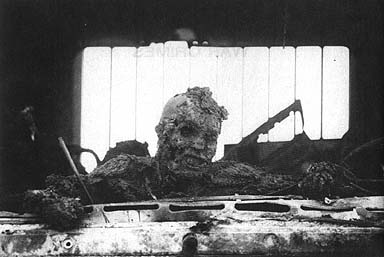
Keep your mop bucket in the closet and give your old crutches to Goodwill. Claiming "dibs" on a shoveled out parking space is the most egregious act of self-entitlement since you bought the goddamn car in the first place:


Since when did the public right of way become storage for your private property?

In Andre Gorz's 1973 screed, "The Social Ideology of the Motorcar," he proposes an analogy of private autos to beach houses. The car is still a luxury in a very real sense - like a beach house (or for my purposes here, a time share) - and only makes sense when few people own them. Or when a lot share a few. Cars become more devalued the more people own them.

"The automobile is the paradoxical example of a luxury object that has been devalued by its own spread," says Gorz. I'm not anti-car, I'm anti-car culture. Cars are incredibly useful tools - I have an I-Go membership and use it all the time - but nobody ever thinks about how much space they use until snow takes it away. Space - like energy - is a precious resource that must not be abused or wasted.

So currently, while cars are still an ideological luxury, in reality they've become an addict's fix because we've completely adapted our environment to their use. This in turn breeds a sense of self-entitlement and "fuck everybody else" impatience that turns us all against one another. Yesterday, on my ride to work (throughly enjoying myself on the wide open roadway) I noticed several side streets choked with snow, unplowed. Yet, even then, some asshole had decided he absolutely had to dig out his car RIGHT NOW - even with so many public transit options within less than a quarter mile...then promptly got it stuck, and had to abandon it right in the middle of the street. What then of the other people that have been waiting until a plow came through before digging out?

Fuck 'em.

Well I say, "fuck them." The suburbs, built for cars and with no viable alternative at all, are dead as oil appears to be more or less permanently above $100 a barrel.

But, imagine how much more livable and enjoyable Chicago and other big cities with viable transit and walkable neighborhoods would be if mass-private ownership of cars died. Think of how much more space we'd have; how secure we'd be riding our bikes and crossing streets.

Think of how healthy and relaxed we'd be - how much better we'd treat each other - if "exercise" was no longer such a loaded word because we walked and biked everywhere...if so many weren't dying from diabetes and obesity and depression and stress...and the rest of us weren't rushing to the gym to get our mandated 30 minutes of running in place while staring at a glowing rectangle because we spent the rest of the day driving and sitting on our ass.

Dig yourself out and claim "dibs" by getting rid of your car.


15.12.10

Reclaiming sense and sustainability

David Brooks argued in the New York Times yesterday that, "America should focus less on losing its star status and more on defending and preserving the gospel of middle-class dignity."

The middle class is a segment of society that has simultaneously grown exponentially worldwide and diminished greatly in stature here at home. A matter of relative perspective, Brooks explains. There are simply more of them, and less of us. While no longer as powerful in their ability to set national priorities, the American middle-class is not yet "eating cake." They simply aren't as distinguished amid so many others.

The middle class - and the United States - have been derided as "tepid and materialistic." In fact, those are the very traits – while stoked and exploited by those with more means – that have led to its nadir. The foreclosure crisis and the looming hammer of debt above are both underwritten by our continued dependence on ever-increasingly expensive fossil fuel; and it has whittled away our disposable income to point of seething anger and blind rage.

However, redemption is not impossible.

Ben Franklin, Brooks reminds us, was one of the original champions of the middle class. While superficially defined as having the means to spend on non-necessities, Brooks explores its deeper values of quality over quantity, of pluralism, innovation, and objectivity. In other words, distinguishing ourselves by what we spend on rather than by what have to spend. Or knowing what is simply not necessary.

"American culture was built on the notion of bourgeois dignity." This dignity is being rediscovered by overcoming the epidemic of obesity and chronic disease wrought by car-centric sprawl and the commoditization of our health and nutrition. It will be reclaimed by standing up and refusing to be marginalized by a lack of transportation options and infrastructure that ignores a great many people's needs and forces them into near-servitude.

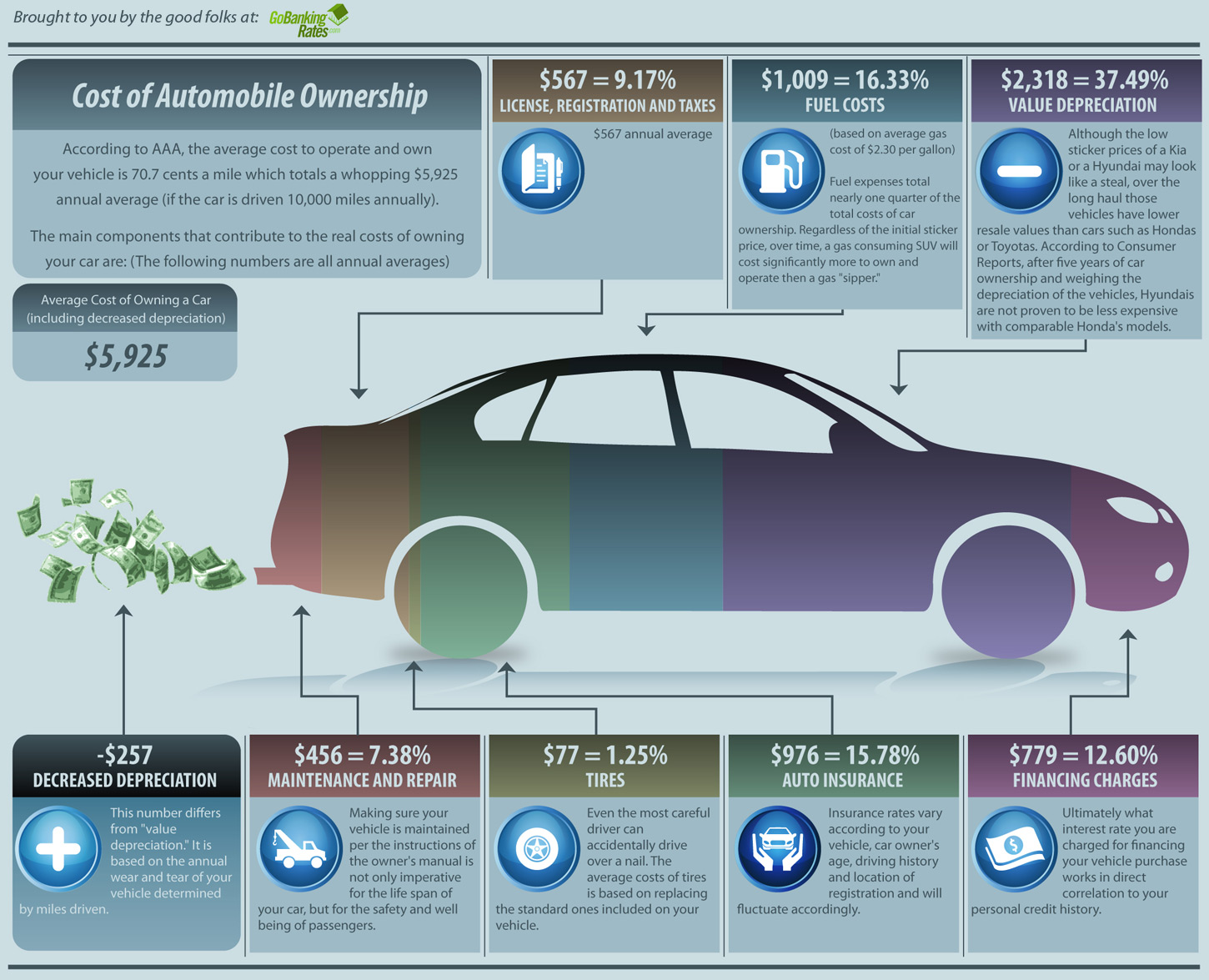
Many Americans go into debt because they feel they must own a car, even while 37% of the money they spend on it is lost to depreciation.

Diabetes and its complications claim one in every five dollars spent on healthcare in this country. This "lifestyle" disease is the reason why so many of us cannot afford health insurance and it is now beyond any doubt that urban sprawl and its drive-only mandate bears much of the blame. Not only because it robs us of the time spent moving our bodies, but of the time spent preparing quality meals and sharing them with quality people during quality time. Robbing us of the expendable income to spend what is actually necessary.

I see a revolution of holistic self-sufficiency and the abandonment of suburbia. Robust transit systems that complement streets which welcome walkers and cyclists along with manageable and safe traffic flow, encouraging efficacy, commerce, and vibrant community will diminish our crushing debt and nihilistic consumerism. Rather than spend two hours a day in the car, then obsessively jump on a treadmill after grabbing take out, the new middle-class will simply bike to work or walk to the train, and have the time afterward to enjoy a real meal with family or friends.

Fewer teens are getting a driver’s license than at any point in the last 25 years.

Measured austerity and real sustainability (as opposed to the "greenwashing" of hybrid cars, wind powered parking garages, and carbon credits – i.e. bullshitting ourselves) will come to define the middle-class in the very near future. It will be the one characteristic that gives them back the power they once had.

Not the power to buy or own what it neither needs nor can afford, but to free themselves of the compulsion to do so.

29.11.10

Food Choices

From the Newsweek article "Divided We Eat":

"This is our charity. This is my giving to the world," says Alexandra,finally, as she packs lunchboxes—organic peanut butter and jelly on grainy bread, a yogurt, and a clementine—for her two boys. "We contribute a lot."


This is not just self-congratulatory masturbation. The "savings" of cheap food, brought about by way of equal amounts of cheap oil, are in reality buck-passing. Those "savings" are borne by the public in the form of healthcare costs (11% of which treat type 2 diabetes alone), pollution, and even directly out of our pockets in the form of subsidies for those "cheap" and very empty calories.

It seems self-defeating to give to charitable public health concerns while at the same time compounding those very problems with your own lifestyle choices. Instead, spend the extra on sustainably-produced foods that have far less negative impact on public health

23.11.10

Awww, poor baby!

It is ironic, sadly and supremely so, that the group of citizens now crying and complaining over the Transportation Safety Administration’s new full-body scanners and aggressive pat-down searches are the same that drive SUVs, minivans, and cars for half-mile trips to the grocery store, to work on days when it’s “just too cold” to wait for the bus or deal with a homeless person on the train, to the gym in order to run on a treadmill, and because “I bought it, so I might as well use it.”

This is a nation so lazily and vociferously addicted to oil, believing that driving everywhere is a civil right and a way of life that they voted for George W Bush, twice, and his gigantic expansion of our already unwelcome presence in the Middle East to outright war. Not that we’d have avoided war with another president, not without changing our ways. Obama is proof of that, ineffectiveness incarnate. But by electing Bush and a propaganda machine, we convinced ourselves we could go on living as we always have, with the small inconvenience of ensuring that our Middle Eastern oil supplies aren’t endangered by Chinese or Russian intervention by intervening ourselves.

That’s the cost of “freedom,” right?

Do you really think that we’re still in Afghanistan to ensure democracy? US combat operations in Iraq may be over but our occupation is not. Do you really think that the weapons-of-mass-destruction-fiasco was just an honest error in intelligence and judgment? You are stupider than your Hummer makes you look.

Do you really think that we’re there to “steal oil?” You are stupider than your Prius makes you look.

We are awaiting the inevitable: the supply crunch. Soon there will not enough available energy at affordable prices to go around among Europe, China, Russia, and the US. It is then our Asian mission will be realized; and once it is, the terror threat will recede far into the background. If you think all parties involved will politely negotiate their way to an agreeable resolution to this shortfall, you are stupider than your protest sign makes you look.

Until then, terrorism is the most visible consequence of our oil addiction, and we bitch and moan about the TSA “abuse” with zero sense of irony. By simply reducing the amount we drive through means theoretically within our grasp we could totally eliminate our dependence on any foreign oil and any need for energy-defense missions. Most trips fewer than two miles could be made by some other mode than automobile. Why do you need so much shit from Target at one time? Why do you need such a huge truck? Can’t you drive something with better mileage? Why can’t you live in a denser area that is closer to transit?

These are all choices that you can make. However, if you have chosen to live in the suburbs and more than 2 miles from your nearest food source, voted for the candidate who cut funding for transit, or would rather drive because the bus “is for losers,” then I don’t want to hear anymore complaining about being turned into a creepy, 3D, black and white centerfold or having your genitals touched by a glorified security-guard no more qualified to be a garbage man and probably paid half as much.

We have only our own selfish behavior to blame. We're losing essential liberty for a little convenience. 300 million people changing a little can change a lot.

11.11.10

Thursday hate

Extra tomato does not mean "one extra slice of tomato."

Someone who asks me for advice but is really only looking for validation on what he's already decided on doing.

People who must get past you to the doors while the train or bus is still moving, especially during rush hour; making me get up or contort to let them pass, risking a fall. I promise you will not miss your stop. And if you do, it won't be the end of the fucking world.

4.11.10

Thursday hate

My top ten targets in the post-oil apocalypse:

10. Litterers.

9. People who block the doors.

8. Eric Cantor.

7. People who start with "www dot..." when giving you a web address.

6. American soccer fans who hate all other American sports.

5. People who go apoplectic against cutting social services but don't have a library card.

4. Litterers littering energy drink cans get an extra.

3. People who blame the imminently approaching economic abyss on liberalism and over-regulation.

2. People who won't eat vegetables, but they'll have their own problems.

1. "I said, 'please move your bag.'"