"Don't buy upgrades. Ride up grades." --- Eddy Merckx
"You drive like shit." ---The Car Whisperer
29.9.11
Thursday Hate: "Welfare Queens"
2.5.11
Looking down
But all of us will be feeling the pinch - if not now - sooner or later at the grocery store. For sure, one way to alleviate a lot of the pain is having that room in your budget instead of losing it to direct fuel costs. But soon formerly well-fed people will be going visibly hungry, and along with the news of high fuel prices, will be the news of growing starvation among the first world.
Since 1960 the population of Earth has been discovering one barrel for every four we consume. Some call it "Peak Oil Theory."
Actually, according to the International Energy Agency, and now the International Monetary Fund, it's reality.
When will we start noticing the fewer planes in the sky? The abandoned cars and trucks rusting in the streets? In ten years, who will be able to afford them? Each day, the dollar buys less and less, fuel becomes more and more expensive, because there is less and less net energy to fuel production of the goods and services that fuel our economy.
Any return to growth as pined for in the mass media is a self-delusional lie. We are headed into a new, heretofore unexperienced historical epoch of contraction. All of our economic growth was ultimately driven by the annual increases of available net energy...increases in energy production. But those increases in net energy are gone, never to return.
The "drill drill drill" gang is under the impression that North America has vast unexplored regions where oil is just begging to be discovered. This is not true. The New York Times reported after Obama's speech - in a disgracefully dumb story by Clifford Krauss - that the eastern Gulf of Mexico and Atlantic Coast contain 3.8 billion barrels of oil. Really? Hello! The US uses over 7 billion barrels of oil every year. Does the Arctic National Wildlife refuge contain between 4 and 11 billion barrels (US gov estimate)? Great, that averages out to about a year or so of US supply. And I'm not even against drilling there, only against the idea that it represents a meaningful "solution" to our problem.Meanwhile, the old standby Alaskan oil fields at Prudhoe Bay are depleting so remorselessly that there may not be enough flow in a year or so to move the oil through the famous pipeline.How about Canada's tar sands? Well, first of all, they belong to Canada, not us, unless we want to change that - and that could be politically messy. The tar sands will never produce more than 3 million barrels a day. The operations are already too huge, costly, and damaging to the northern watershed. Canada is our number one source of imported oil, but China would also like to buy Canadian oil. Are we planning to invoke the Monroe Doctrine to prevent Canada from selling its oil to parties outside the Western Hemisphere? That could be messy, too.
8.3.11
George Will hates trains
I occasionally enjoy your writings for the principled conservatism you express, but I found your February 27th contribution in Newsweek to be nothing but good, old-fashioned red-baiting at its most base:
"...the real reason for progressives’ passion for trains is their goal of diminishing Americans’ individualism in order to make them more amenable to collectivism."
High Speed Rail as is being pushed by the DOT and Obama is undoubtedly going to be wasteful, but don't use that to paint the entire mode of Rail. Rail is much more economical than driving in terms of fuel efficiency in $/passenger-kilometer, and the basis of the infrastructure is already there and just needs to be revived/updated.
Yes, if viewed as a purely government-funded exercise, rail is more expensive. But rail pays a greater percentage of its way through fares (62% of operating expenses) than driving does via gas taxes and tolls (less than 50% for the Federal Highway Administration).
Further, why is rail vilified for being subsidized by the government when the same can be said for our highways? Because its detractors can't let go of cheap gas (gone forever), and are deliberately comparing apples to oranges: on percentage of current mode-share vs. what is currently subsidized through taxes. Rail ridership grows every year, and track infrastructure with equal mode-share is much more economical than continued maintenance of interstate highways we can no longer afford.
Fighting "global warming" is an unwinnable battle but, rail also pays dividends in reducing pollution and improving public health. Why do you hate people's lungs, George?
There's no denying the $50-80 billion nationally per year in additional healthcare costs from transportation related pollution. To say nothing of the $150 billion in additional costs dealing with type 2 diabetes - a direct result of our car-dependent sedentary behavior.
The free ride of cheap oil is over, George. The airlines will soon be a millionaires club, and local travel and development will be increasingly more oriented towards transit, bicycling, and walking. The direct and indirect costs of a car-only transportation policy are simply too great to bear anymore. Roads are not an entitlement, and it's time to stop paying for them with the wallets of the middle-class and lower, as Scott Walker is doing in Wisconsin.
Your argument is bullshit and reactionary. You know this, so you just resort to the fossilized cliché of calling people "communists." It is your only defense against people who don't embrace the pointless consumerism of car-culture or the fallacy of "individualism" predicated on an endowment of cheap, convenient energy. Against those who place more value on public space, community, efficiency, and health.
American individualism is far older the automobile; it was born out of finding a better way of doing things.
1.3.11
My email to David Brooks of the New York Times
I have recently become a big fan of your writing.
Your recent columns, "Ben Franklin's Nation," "Run, Mitch, Run," and "The New Normal," resonated with me greatly. Indeed, the middle class need to reclaim our dignity by distinguishing ourselves by what we spend on, rather than what we have to spend. I, too, hope for a measured approach in ensuring the inevitable austerity is less painful.
I suppose you might call me a progressive-realist. I work for a Chicago nonprofit that advocates for better biking, walking, and transit for our citizens. Not the typical resume of a Republican. And I don't identify as such, but I am a fan of Mitch Daniels.
Mitch Daniels played not a small part in the passage of Indiana's landmark Complete Streets bill late last year. Complete Streets is the concept that most new public roadway development considers all possible users. Daniels realizes there are great gains to be achieved by reclaiming a portion of the public space for the use of all.
These are gains in energy efficiency, quality of life, and public health that will positively affect the bottom line of governments across the land.
Our current infrastructure, heavily car-centric, is much like a third-rail entitlement program, eating up increasingly more of the budget and creating dependency (on low energy prices).
Several recent studies have shown the huge dividends of investing in bicycling, walking, and transit-oriented development, especially in fuel savings and lower public health burden.
The American Journal of Public Health reported last November - covered by NPR - that in cities with high rates of active transportation, obesity and diabetes rates are 20% lower or more. Treatment of type 2 diabetes claims $1 in every 100 dollars spent in this country, and each sufferer can incur additional lifetime healthcare costs of up to $400,000. One in three born after the year 2000 will contract it.
A brand new study by the Journal of Physical Activity and Health found that by 2040, bicycling investments in Portland, OR in the range of $138 to $605 million will result in health care cost savings of $388 to $594 million and fuel savings of $143 to $218 million.
Finally, the Chicago Tribune reported that the city's Bike 2015 Plan is indeed working: they've built the lanes, and the cyclists - finding increased safety - have come. Business Week cites findings that such infrastructure cuts cyclist injuries by half. Mayor-elect Emanuel has pledged to increase the rate of bike lane development in Chicago from 8 miles per year to 25, and has promised to open the Bloomingdale Trail - the sister of NYC's much celebrated and successful High Line - before the end of his first term.
It is my hope that you will weigh in with your support on these solutions that Indiana, Chicago, and many other towns across America are implementing to cut loose the stranglehold that car-only infrastructure has on their budgets, their health, and their public space.
Thanks for reading.
21.2.11
On Wisconsin (so go the rest)
Only 5 states do not have collective bargaining for educators and have deemed it illegal. Those states and their ranking on ACT/SAT scores are as follows:Where it starts to get really ugly is when the lies quickly get mixed up with the facts. Indeed the Wisconsin state unions offered concessions with their pensions and benefits as an alternative to losing their collective bargaining power. Indeed Governor Scott Walker ignored those offers of negotiation and is now attempting to legislate their collective bargaining rights out of existence. Indeed, the police and firefighters unions who were spared their right to collectively bargain on the virtue of their previous endorsement of Walker have now rebuked him in support of their brethren.
*South Carolina -50th
*North Carolina -49th
*Georgia -48th
*Texas -47th
*Virginia -44th
Wisconsin is #2 in ACT/SAT scores. Re-post if you think this is important.
But, a claim is now also making the rounds that Wisconsin actually had a budget surplus and that Walker has engineered the crisis to pay for his corporate tax-breaks.
It's bullshit.
The figure being cited by Rachael Maddow and her sycophants omits over $200 million owed to state programs ("But ignoring it would have meant turning away eligible Medicaid clients, which was not an option..."), and could be an additional $200 million in the red if additional debts are figured in, pending a court ruling. As well, the hits from the tax breaks won't hit for another two years.
Scott Walker is specifically targeting the collective bargaining rights of state workers because he knows what the people repeating these memes and distortions do not: that the overall financial pie is getting smaller and will continue to do so. Targeting the strength of these workers to negotiate their earnings is the Right Wing's longer-term strategy for holding on to their total volume of resources, versus keeping merely their share, relative to the rest. The growth simply isn't there to support the infrastructure we've built for ourselves over the 20th century without cannibalizing - as in this case - functions deemed "less essential."
The proof is in the "fine print" as the JSO notes with regards to the Medicaid debt. Those arrears were obviously deemed "least essential" by the state, until it was evident they couldn't get out of paying those debts, legally. So, the plan then became: make up the difference by screwing those who can be screwed legally. Only "screwing" isn't exactly a mandate and now we have the present situation in Madison on Capital Hill - mobs of protesters eating in the cafeteria intended for the politicians, who - Democrats anyways - are on the lam to prevent a quorum from being established to vote on the pending bill.
This explanation leaves some bigger questions hanging, and to answer those we need to look at the bigger picture. Why isn't there growth to support the debts being incurred by Wisconsin, and of course other states, including Illinois? This lack of growth is evident globally, in fact. Look at what's going in the Middle East due to fuel and food shortages, as well as the riots in Greece, The UK, and France earlier last year in response to very similar budget tightening measures.
The pie, as I mentioned, has been getting smaller every year since global oil production peaked in 2006 (even the Wall Street Journal acknowledged the premise in 2008, and the IEA declared it so last year.) This is a very...big...problem, and what we are seeing in Wisconsin and world wide is just the beginning of the reprecussions.
At the core of it is the following paradox: a global financial system predicated and fully dependent on constant growth to pay the debts incurred by the creation of wealth, driven by loans, yet fueled by a finite resource. Yes, that growth comes from (came from, sorry) the increasing net energy available to us, through energy production. It's what made us as a society more productive each year.
Oil accounts for 40% of the world's total energy needs and simply replacing that energy through other means without considering the effects of the cascading consequences is pure folly. Not the least of which is that all of the infrastructure changes required to make such a shift are still dependent on an oil-based system. And others, such as Bush's "hydrogen economy" are pipe-dreams, net-energy losses.
And most basically, the fact that no other fuel comes close to conventional oil's efficiency and convenience. Billions of years of sunlight, locked up in a drivable, flyable, shippable, pipeline-able package, all at our convenience.
And finally the election of Scott Walker, et all. They will deliver scapegoats and the promise of the status quo. Not the painful truth.
It's like a trust fund kid who's money is running out and has to take the bus from now on.
Contraction is coming, in a big way. We've far overshot the natural carrying capacity of our environment - artificially inflated by the energy from fossil fuels, a once-in-a-planetary-lifetime shot, and we've squandered it in little over 200 years.
I know that I have only seen it rain
That never has it stormed within my path
I read the pages, looking at the pain
And heard the ruminations on God's wrath.
I cow'r in fear to dwell upon my fate
That's been foretold by corpses walking past...
They cackle at my slick-skinned naivete
With toothless leers and bony fingers crossed.
Expensive clothes and robes now turned to mold
Rotten, sour agelessness of excess
To be undone by no amount of gold -
Illuminating only scars and sadness.
While great swaths of fire, birthed by lightning,
Clear the remains of every living thing.
4.2.11
Dib this

15.12.10
Reclaiming sense and sustainability
The middle class is a segment of society that has simultaneously grown exponentially worldwide and diminished greatly in stature here at home. A matter of relative perspective, Brooks explains. There are simply more of them, and less of us. While no longer as powerful in their ability to set national priorities, the American middle-class is not yet "eating cake." They simply aren't as distinguished amid so many others.
The middle class - and the United States - have been derided as "tepid and materialistic." In fact, those are the very traits – while stoked and exploited by those with more means – that have led to its nadir. The foreclosure crisis and the looming hammer of debt above are both underwritten by our continued dependence on ever-increasingly expensive fossil fuel; and it has whittled away our disposable income to point of seething anger and blind rage.
However, redemption is not impossible.
Ben Franklin, Brooks reminds us, was one of the original champions of the middle class. While superficially defined as having the means to spend on non-necessities, Brooks explores its deeper values of quality over quantity, of pluralism, innovation, and objectivity. In other words, distinguishing ourselves by what we spend on rather than by what have to spend. Or knowing what is simply not necessary.
"American culture was built on the notion of bourgeois dignity." This dignity is being rediscovered by overcoming the epidemic of obesity and chronic disease wrought by car-centric sprawl and the commoditization of our health and nutrition. It will be reclaimed by standing up and refusing to be marginalized by a lack of transportation options and infrastructure that ignores a great many people's needs and forces them into near-servitude.
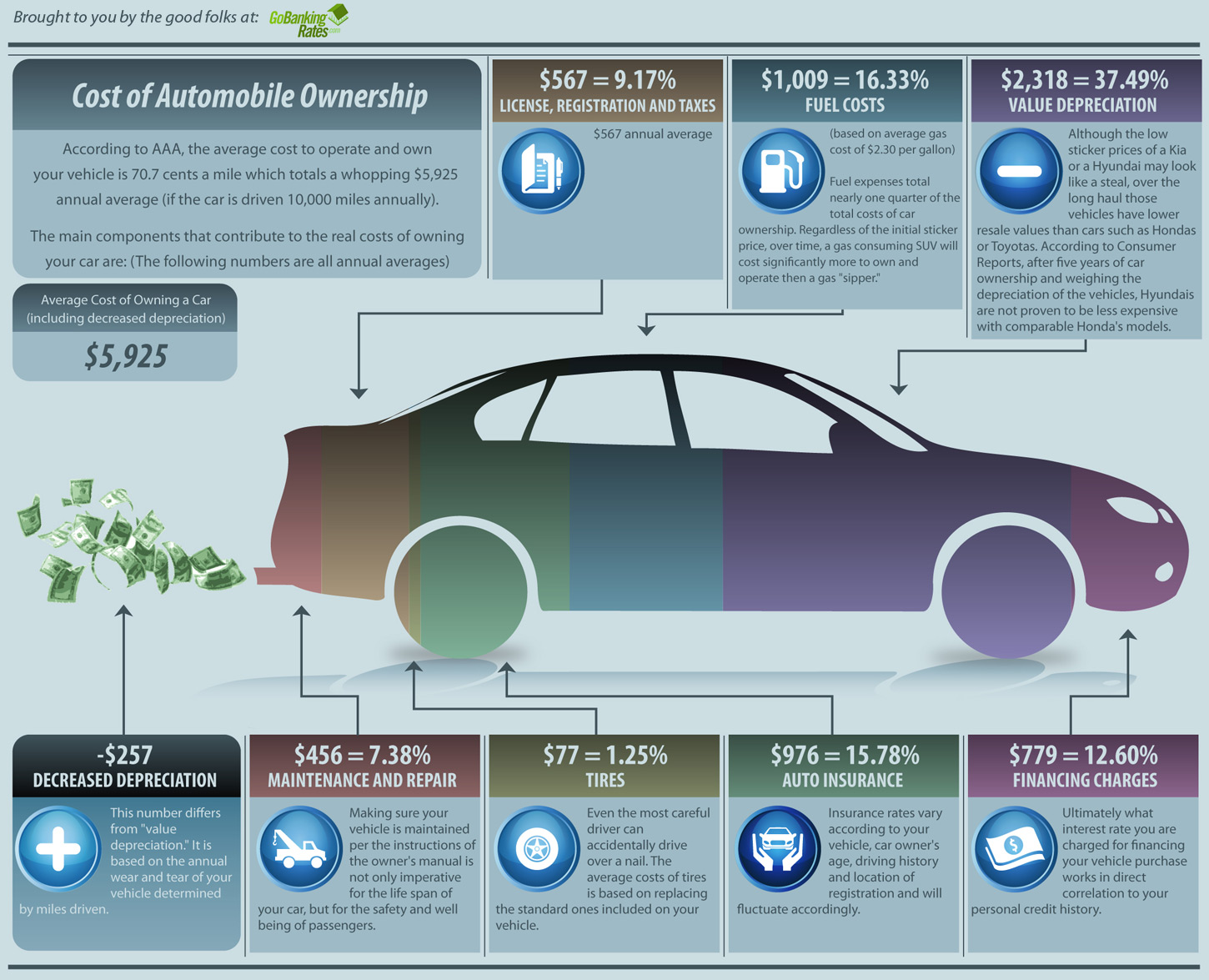
Many Americans go into debt because they feel they must own a car, even while 37% of the money they spend on it is lost to depreciation.
Diabetes and its complications claim one in every five dollars spent on healthcare in this country. This "lifestyle" disease is the reason why so many of us cannot afford health insurance and it is now beyond any doubt that urban sprawl and its drive-only mandate bears much of the blame. Not only because it robs us of the time spent moving our bodies, but of the time spent preparing quality meals and sharing them with quality people during quality time. Robbing us of the expendable income to spend what is actually necessary.
I see a revolution of holistic self-sufficiency and the abandonment of suburbia. Robust transit systems that complement streets which welcome walkers and cyclists along with manageable and safe traffic flow, encouraging efficacy, commerce, and vibrant community will diminish our crushing debt and nihilistic consumerism. Rather than spend two hours a day in the car, then obsessively jump on a treadmill after grabbing take out, the new middle-class will simply bike to work or walk to the train, and have the time afterward to enjoy a real meal with family or friends.
Fewer teens are getting a driver’s license than at any point in the last 25 years.
Measured austerity and real sustainability (as opposed to the "greenwashing" of hybrid cars, wind powered parking garages, and carbon credits – i.e. bullshitting ourselves) will come to define the middle-class in the very near future. It will be the one characteristic that gives them back the power they once had.
Not the power to buy or own what it neither needs nor can afford, but to free themselves of the compulsion to do so.
23.11.10
Awww, poor baby!
This is a nation so lazily and vociferously addicted to oil, believing that driving everywhere is a civil right and a way of life that they voted for George W Bush, twice, and his gigantic expansion of our already unwelcome presence in the Middle East to outright war. Not that we’d have avoided war with another president, not without changing our ways. Obama is proof of that, ineffectiveness incarnate. But by electing Bush and a propaganda machine, we convinced ourselves we could go on living as we always have, with the small inconvenience of ensuring that our Middle Eastern oil supplies aren’t endangered by Chinese or Russian intervention by intervening ourselves.
That’s the cost of “freedom,” right?
Do you really think that we’re still in Afghanistan to ensure democracy? US combat operations in Iraq may be over but our occupation is not. Do you really think that the weapons-of-mass-destruction-fiasco was just an honest error in intelligence and judgment? You are stupider than your Hummer makes you look.
Do you really think that we’re there to “steal oil?” You are stupider than your Prius makes you look.
We are awaiting the inevitable: the supply crunch. Soon there will not enough available energy at affordable prices to go around among Europe, China, Russia, and the US. It is then our Asian mission will be realized; and once it is, the terror threat will recede far into the background. If you think all parties involved will politely negotiate their way to an agreeable resolution to this shortfall, you are stupider than your protest sign makes you look.
Until then, terrorism is the most visible consequence of our oil addiction, and we bitch and moan about the TSA “abuse” with zero sense of irony. By simply reducing the amount we drive through means theoretically within our grasp we could totally eliminate our dependence on any foreign oil and any need for energy-defense missions. Most trips fewer than two miles could be made by some other mode than automobile. Why do you need so much shit from Target at one time? Why do you need such a huge truck? Can’t you drive something with better mileage? Why can’t you live in a denser area that is closer to transit?
These are all choices that you can make. However, if you have chosen to live in the suburbs and more than 2 miles from your nearest food source, voted for the candidate who cut funding for transit, or would rather drive because the bus “is for losers,” then I don’t want to hear anymore complaining about being turned into a creepy, 3D, black and white centerfold or having your genitals touched by a glorified security-guard no more qualified to be a garbage man and probably paid half as much.
We have only our own selfish behavior to blame. We're losing essential liberty for a little convenience. 300 million people changing a little can change a lot.
3.11.10
Humped Day: we deserve it
More mental heath care for veterans is great, it truly is. So is preventing providers from excluding pre-existing conditions upon new employment. These provisions would've been easily passed with bipartisan support. This is the kind of change people wanted.
The added entitlements of insuring millions of needy Americans who cost the most to treat because they suffer from chronic disease due to poor diet and lack of exercise, caused by government policy that was left completely untouched, was not the change people wanted. And the fact that it was passed without ANY bipartisan support at all has some people rightly pissed.
Especially after they just finished paying over $700 billion, instead of lining each of those motherfuckers up against a wall and putting a bullet in their brain, to the Wall Street criminals who fleeced the taxpayers that had any money left after they hatched a scheme to sell mortgages to people who couldn't afford them, then bundled them up in fraudulently-rated securities and sold them again, while taking out insurance policies on all of them - those millions and millions of little financial hydrogen bombs, credit-default-swaps.
Who's to blame? Probably Republican Phil Graham for sponsoring the 1999 bill which repealed part of the Glass–Steagall Act of 1933 and removed the wall between commercial and investment banks, or the current standard-bearer for modern Democrats, Bill Clinton, who signed it. Take your pick.
But Barack Obama passed financial reform, you protest? Big fucking deal. Too late, the horses are already out of the barn. The accumulated debt at the core of it all - mortgages owned by people who couldn't pay them - debt that was greater than our combined ability to pay it, caused it all to fall apart. We got stuck with the bill and the world would end if we didn't pay.
This may not have come directly out of our pockets, but in the coming years, as our schools get worse, more bridges collapse, and ever-more reactionary politicians rescind funding for rail and complete streets infrastructure and planning, the criminality of it all will become very apparent.
The world, as we know it, is still going to end.
And this is what pisses me off the most: there is not one word about what the fuck Obama has done for sustainable transportation. The planning and ideas coming out of our Department of Transportation are the most innovative in years, former Republican Illinois state senator Ray LaHood is doing incredibly great work. And it may all be squandered by Obama breaking his word on being a bipartisan reformer. Not all conservatives are entirely beholden to special interests, some just think entitlement spending has gone too far. And when we're spending money to insure unhealthy people without first addressing WHY they are unhealthy, I think that's a good reason to say no.
And now, because of it, very real planning and the few good ideas to come out of this administration so far - transportation mitigating our dependence on cars - are at risk of being cut. In many states, such as Wisconsin, it's already on the block. And amid the permanent energy crunch that is being direly predicted in the coming years, we'll again be left forking over many more millions to pay for this next, now permanent, emergency.
And the folks who reacted to Obama's ineffectiveness will react the same way to these new Republican's ineffectiveness, by voting in even more reactionary politicians. All very sad, because our downfall is completely out of any politician's control. They will make Joe Miller and Sharon Angle (and her vague threats of "2nd amendment remedies") look like Jimmy Carter and Walter Mondale.
Bookmark this blog entry. Title it, "was Brian right?" Come back in the fall of 2012 and see if we aren't ruing our continued dependence on cars and suburban sprawl. And I'm very sorry that your feelings are hurt because a bunch of gun-wielding insurgents got voted into office around the country yesterday, but that's what you get when you don't take other people's opinions into account.
28.10.10
Pipe dreams
A half-decent screed on t r u t h o u t was brought to my attention today by some friends on facebook. Author Henry A. Giroux claims that Tea Party vitriol is led by a vast conspiracy of rich people getting greedier and meaner, the result of a collective loss of our moral compass over the last 30 years - since Reagan's election.
I read it, realized he was partly right, and was quickly reminded of the book I just finished a few weeks ago, James Howard Kunstler's, The Long Emergency. We have gone through about half of our total endowment of fossil fuels - specifically oil and gas, Kunstler writes - the cheap and easy-to-get half (and especially our own rapidly depleting supply of gas, and we do not have the infrastructure to import LNG at soon-to-be needed levels). It's all down hill from here. If anything, read the book, written in 2004, for Kunstler's related prediction of the housing collapse and foreclosure crisis will make the hairs on your neck stand up as stiffly as a legion of brownshirts coming to attention.
And many sources would say he's right, showing that global production peaked as late as four years ago. Consequently, Giroux is right, too. Our "ideals" did begin to change once Reagan was elected, because Reagan's election was in fact a reaction to our collective failure to deal with our own national peak oil crisis, in 1970: blaming it on the liberals and Arabs.
What next immediately jumped out at me was Giroux's absolute denial that government solutions don't work; that reams and books and stacks and entire libraries and roomfuls of computer servers of rules and regulations have never worked. His stone-faced failure to acknowledge that the Tea Party is, ultimately, a very real reaction. We're as self-centered as we ever were, 30 years ago, or 3,000. Don't believe me? When has a rule ever changed what you wanted? Needed? Have you ever seen a government RFP? I have. It was 57 pages of ADA, EEO, and DBE accommodations that would drive Bill Gates to become a turnip-farming revolutionary.
That the Tea Party is a reaction seems self-evident at first, because all liberals love to tout how proactive they are. But failing to address the action that caused the reaction you are condemning makes you just as big a reactionary.
Everyone loves to argue these days about who the real Nazis are, who's the real next Hitler. The truth is, who ever is in power the moment the permanent energy shocks and blackouts start is gonna be saddled by that unfortunate historical comparison. Unfortunate because it will be completely out of their control. We'll all slip into a collective psychosis, as Kunstler warns, looking to blame our problems on someone that is not ourselves, very much like the real Nazis and the German people of the 1930s.
You think the Tea Party supports your right to bear arms? Just wait until they're in power when the center starts really coming apart and they suddenly start taking the blame. I got yer second amendment right here. And the 1st, 3rd, 4th...you get the picture. And if Barack Hussein Obama and his crew happen to be the unlucky ones still in power when the shit goes down, then Palin and Co. will be proven right, but only by accident. If only they could be so lucky.
Truth is, labels shift and blame changes with whoever is in power because nobody wants to deal with the truth. It's the reason Palin, Paul, Miller, Angle, and O'Donnell are all part of this current zeitgeist. They're on the outside looking in, claiming to have all the answers. They'll be sorry when they're finally in and want out.
According to Kunstler, the world's endowment of cheap energy has made the illusion of modern economic utopia possible, including the ability for our nation, with all its diverse political views, to tolerate the massive entitlements that come with a modern democracy. But as the energy that underpins our entire, now global, society becomes unaffordable, we're suddenly realizing that we can't afford those entitlements anymore because we've dumped so much national wealth into an unsustainable lifestyle that only runs on cheap gas in our cars (read: the suburbs).
Employers can't afford to keep the payroll what it was. Food prices, for goods shipped in from all over the world, are getting too expensive, especially for the unemployed. Utility shut-offs ("come on, people...gawd, pay yer BILLS!") are the highest since the Great Depression. Freezing in a dark apartment has a sudden chilling effect on your democratic ideals.
But how can we get rid of all the entitlements? Privatization? I have several family members that each lost nearly $100,000 in investments in 2008, all their own private stash, when the market tanked. It's all moot anyway, no one can live on a SSA check alone to begin with.
So let's blame Harry Reid and his Mexicans.
As if Nevadans are going to wake up November 3rd and find all the illegals gone before Sharron Angle even takes her oath. Or even the year after. Although, in a few years, Nevadans will wake up to find all the water is gone and no one can afford their AC bills. I'd like to see Angle fix that. If she tries to come to the great lakes with a water pipeline, long a Nevada pipe dream - after they've let private mining operations drain their unreplenishable aquifers at the expense of all those people living a friggin desert (Lake Mead is at it's lowest level since the Hoover Dam made the goddamn lake!)...she'll have a fight on her hands, by god, cause I'm voting local. That's one example of socialism against which I'll join a revolution.
(Plus I love that she got so upset when that fat woman on The View called her a "bitch"...that after she told Reid to "man up." She can dish it out, but can't take it. Gender stereotypes go both ways, Sharron.)
And now that we're trying make things more efficient and sustainable, they call people like me a "socialist." With our bike lanes, VMT-reduction goals, 20-minute neighborhoods. They may be right, because it will still be underwritten by oil. Socialism is only an attempt to keep it all banded together with bailing wire and bubblegum what won't stay together on it's own without a huge endowment, a trust fund of cheap energy - gas and oil.
And don't give me the nuclear power argument - do you think the technicians needed at those plants are gonna get to work in nuclear cars? Nuclear's contribution is currently far too low, and electric cars are barely on the market. The time is now, the danger immediate. By time the market responds it will be too late. You only have to look once at Russia's nuclear situation for a clue as to what our own infrastructure may soon look like. And the "socialist" solution is provoking the very reaction about which I've decided to write.
Is it too late? It depends on your definition of "too late." The reality is probably that renewables will never satisfy our current demand. Kunstler argues that contraction, in that scenario, is the only way. He is proving to be more right every day, and it is a bitter pill for an ever growing number of people to swallow.
11.8.10
Hump Day: happiness calling
I don't normally mix work and writing but I'm so excited I just have to give a little bit away.
September 1st I go to work for a group that I have been more and more connected to since I began volunteering for them in 2006. I feel like Superman right now, and I've been able to think of nothing else.
I will be working to get us - Chicago - out of our cars and onto our bikes, our trains, (yes our taxes and fares pay for them), and our sidewalks, paths, and parks. To make Chicago a better, friendlier, more enjoyable and happier place to live.
To give a much-needed push to the boulder that stands on the precipice of the tipping point in turning back a cancerous car-culture with a powerful and resounding, "No!"
And I get to develop lots of cool ways to do it, like top-down consulting and recruitment, grass-roots organizing, and web and mobile platforms to bring it all together. All the while riding, walking, and transiting to network with the people who will make it a reality.
I wasn't sure if I'd ever get here, but I think I've found my calling...is there a phone booth around here?
22.6.10
Talking heads, bikes and the city
So when faced with the choice to wait an hour for the next train and miss my call, or head home to take it, then"work" from home the rest of the day, instead of biking in later (actually I did put in two or three solid hours after), you would've done the same. Even on Bike to Work Day. And since I rode to the train and back, I could count my miles for the Commuter Challenge.
As I rode home and then sat inside, dying to get out and play in the nice weather, I couldn't imagine the forecast for storms later that afternoon would be accurate. After I was off the phone I took Jack for a nice walk to grab a coffee (and a McMuffin...I wasn't lovin' it, but I sure was cravin' it for some reason).
The nonsequitur of the day came shortly after placing my order, just behind two frumpy, middle-aged, female cops. They kept coming back up and asking for extra cups and spoons and shit. A few seconds later I felt a pleasant sensation that I only associate with Patty, namely her wrapping her arms around my waist. The freakout came when I realized it was one of the cops, fully enveloping me in a creepy hug while asking for another cup.
"Excuse me!" I spewed as I recoiled from her grasp.
The arms came off and she continued with the counter help, not even acknowledging me in the least, just a free grope at the MacDonald's.
Well, the sky started to darken a bit, and soon it appeared that fat bastard Skilling had nailed it. I decided to race the rapidly approaching storms to Daley Plaza and the Bike to Work Day rally, to pick up my tickets for the David Byrne event. I thought I had more than enough time from the looks of the radar, but riding down Elston not even at Fullerton I started to get rained on. Little pockets of teasing moisture passed with intermittent sunshine, but looking west at the turmoil churning towards me, I started to wonder when I'd need to find shelter.
This was the sight before all hell broke loose (my shutter just missed a lightening flash by a second or two):

That's Milwaukee overlooking the I-90/94 Ohio St. entrance ramp. Just past Halsted and Grand, the wind really picked and started driving all the dust from filthy Kinzie Ave and the overpassing Metra tracks, nearly blinding me. I barely had time to get under the awing at the new Jewel on Des Plaines before it opened up.
And there I sat waiting it out, watching much braver souls than I trying to get where they needed to be, in much difficulty. It seemed like the end of the world, as trees bent sideways, the skyline disappeared in the gray doom, and thunder ripped apart the air almost on top of the seizure-inducing lighting flashes.
When I finally reached the site of the rally in a remarkably pleasant and soothing drizzle, the plaza looked as though a giant hand had come down and swept all the tents, umbrellas, and picnic tables into a huge twisted pile of metal stacked up against the windows of the courthouse:

I was told I could simply pick up my tickets at the event venue by a friendly leftover volunteer from the rally, so next I pedaled over to the Cultural Center. There I found the XRT kids (it was the station's event, big thanks to Richard Milne!) and then ran into Ethan, of Active Trans. We sat chatting for a bit and I actually saw the head Head himself enter. Then I split to go meet Patty at The Gage pub, a fantastic Michigan Avenue small plates bar, a bit pricey, but unique dishes, such as the house poutine, with elk ragout and Wisconsin cheese curds.
The forum was a couple hours later, as I mentioned an XRT event, featuring David Byrne as the celebrity guest, basically on a book tour for his "Bicycle Diaries," of a round table discussion entitled, "Cities, Bicycles, and the Future of Getting Around. " It was certainly a who's-who of Chicago cycling and alternative transportation advocates, for I recognized many, many faces from past similar events.

David Byrne took the stage to a huge round of applause, and started the presentation with his slide show. I've heard both good things and bad things about his book - haven't read it - and his presentation. I found that I enjoyed it. It would've been no different had I been in his living room seeing pictures from his most recent music tour. He was stream of thought, one leading to the next, basically taking the audience through modern city-planning's watershed wasted opportunites, the current sad state of affairs, and hopefully where we can go. Lots of slides of 1920's sketches and city plans, blighted parking lots and overgrown shopping malls, and beautiful trails and thoughtful examples of complete-streets planning.
Luann Hamilton of CDOT showed us a good amount more specifics, including some teasers on the Bloomingdale Trail, the Navy Pier Flyover, and a planned traffic diet of Lawrence Avenue between Ashland and Western. She gave us one amazing and joyous traffic figure: during rush hour, the current traffic make-up of Milwaukee Avenue can be as much as 20% bicycles.
Suck it, George F. Will.
Jacky Grimshaw of CNT gave a rundown on the engineering thought and theory that goes into planning liveable cities, such as how to build a 1 mile walk instead of a 3 mile drive from point A to point B.
Finally, the accomplished Randy Nuefeld, the former CBF director and now director of the SRAM Fund, gave the most direct-action presentation we'd seen yet. As he began, I realized there was no way David Byrne could've gone last. He could not have have followed this. I knew when finished, Randy would get the biggest applause by far, and we'd all leave, pulling at the harness to get to work and make things happen.
I'll let Steven Vance take you through Randy's presentation.
BTW, you know you've been commuting a long time when you recognize Andy Daley, in full Clif Bar kit, in one of Randy's presentation photos of the Milwaukee/Ogden/Chicago intersection.
6.5.08
Punishment
But then she asked that he be left alone, and let us focus our anger from this terrible accident on making the streets and societal norms safer for cyclists and others.
What the hell have we been doing all this time?!? Bike lanes, public awareness campaigns, community outreach? Fundraisers, constant lobbying, Bike to Work Week? Ghost bikes, silent rides, benefit shows?
Yet, there are still dead cyclists. And inattentive motorists simply walking away from the havoc they caused with a black mark on their driving records. Yes, I realize they have to live with what they've done, and that they are sorry. But Amanda Annis isn't to get any consolation out it because she's dead.
So we are merely asking that the plethora of laws in place designed to protect people like Amanda Annis be enforced, and that Curtis at least receives a justifiable charge for his actions, instead of merely being cited for "traffic offenses." Otherwise, all the work we've been doing I listed above is nothing more than masturbation.
There are people who are trying very hard to reduce the encroachment of car-culture and infrastructure on our quality of life. And this incident has made us very angry. We're going to see to it that Curtis, and anyone in the future, just as we have in the past, as we continue to press against Thomas Lynch and in the case of Thomas McBride, is charged with the crime they've committed, and that cyclists are no longer blamed for their own deaths and injuries, just for "being there."
Cars. Are. Lethal. When taken for granted by careless people, they kill people just as a gun would. It is time punishment fits the crime of taking someone's life through the misuse of an automobile, just as it would with the misuse of a gun.
And lastly, as has been stated already, driving is a priviledge, not a right. If Curtis couldn't afford insurance, he shouldn't have been driving. It's a drain on society that just passes on one person's debt to others, and it's indefensible.
It's now a fully-realized tragedy that drivers who can't afford insurance are so blinded by car-culture that they believe there is no other choice than to drive without it. There are many options for people who choose not to have insurance.
Bicycles are one of them.
9.8.07
Free Baconators
Doesn't Wendy's have enough of their own stores that they have to take over public space to hawk their burgers? Who controls that space? I hope that if it's the Tribune, they exercise full disclosure the next time the run an article on the American Obesity Epidemic. Much like society as whole, 60% of the line waiting for a free Baconator was morbidly obese.
And it's not just confined to Tribune Plaza. All up and down the Mag Mile I was accosted by assholes wearing stupid red wigs with wired braids - "Did you get yer Wendys?! A-heee-yulck!"
Our public space in these modern times are our temples. And they are being sold to the highest bidder:
Jeremiah 7:11
11Has this house, which is called by My name, become a den of robbers in your eyes? Behold, even I have seen it, saith the LORD.
21.7.07
6.7.07
Only 487 more days...
I have been a supporter of Ron Paul for few years, ever since first reading his contributions for Counterpunch. Dr. Paul (Ob/Gyn) is a representative from Texas and is about as Old School Republican as you can get. I myself am from Alaska, a very Republican state, and in many ways, just as Old School as Mr. Paul. As in, Libertarian. As in, don't touch my guns, my pot, or my property.Ron Paul Tops McCain in Cash on Hand
July 06, 2007 1:14 PM
ABC News' George Stephanopoulos Reports: Though often regarded as a longshot candidate for president, Republican Ron Paul tells ABC News that he has an impressive $2.4 million in cash on hand after raising an equal amount during the second quarter, putting him ahead of one-time Republican frontrunner John McCain, who reported this week he has only $2 million in the bank.
In an exclusive interview taped Friday and airing Sunday on "This Week," Paul said his campaign is on a better trajectory than McCain's.
"I think some of the candidates are on the down-slope, and we're on the up-slope," said Paul.
Paul's cash on hand puts him in third place in the Republican field in that important metric, although he is well behind leader Rudy Giuliani, who has $18 million in the bank, and Mitt Romney, with $12 million.
Paul, who polls show with support in the low single digits, said his surprisingly strong fundraising is the best measure of his support.
"I think people have underestimated the number of people in this country who are interested in a freedom message," says the Republican congressman from Texas, who has strong libertarian leanings.
Click HERE to watch a clip from the interview.
To watch the full interview, tune in to "This Week" on Sunday (check local listings).
Back in 2004, nobody had heard of Ron Paul. And when they did, they didn't really know what to think of him. Here was a candidate, a very popular one in his district, calling himself a Republican, yet, who was very much against the War in Iraq, and pretty much against all of President Bush's policies, not to mention George on a personal level, as well.
Dr. Paul is against much of the government bureaucracy, especially the IRS, the ATF, the DEA, and many other agencies and acronys. He is a strident defender of the Bill of Rights, including the 2nd Amendment. Abortion is something that would not be protected under a Paul Presidency - he objects on religious reasons, as well as his Hippocratic Oath. A Supreme Court nominee would almost certainly vote against the Roe v. Wade precedent. The U.S. military would be relegated to a border protection mission only, and all foreign interventions immediately recalled.
I have identified with many aspects of the Libertarian philosophy, as well as the traditional Liberal viewpoint. It is true many of them are in conflict. This very conflict drove me to vote for Nader in 2000. Yet, the issues that affect this country are not Gun Control or Abortion - the stakes are much higher. Any President who tries to control these issues will soon realize that we are still a plurality, as a nation. Ever since Roe v. Wade in 1973 and the complete swing to the left on this issue, the Religious Right has grown in power based off of their ability to rally the faithful around this issue. And it is definitely moving, and has been for quite some time, back to the right. Yet, when it does, the Right will learn that the Left is still as equally as powerful. The Gun Control issue (on a superficial level) follows much the same pendulum path, the same wavelength.
These issues only serve to divide the population against itself and blind it to the real stakes at hand. Yet by trying not to be influenced by these dividing issues, I played right into the hands of the larger power structure at work.
The one constant since our nation's founding has been the consolidation of power by those in power. It is not really a conscious effort by those in the ruling class to gain more power, but really the government itself becomes self-fulfilling prophesy of growth, a beast that can't stop eating, a great whole based on the sum of it's parts, parts which are really only individuals looking to maintain their wealth and power, ensconce their position.
I believe in a government that serves it's people, not rules. The government today serves only greedy individual interest, through the prophylactic of the corporate charter. The Corporation allows for individuals to shirk any moral responsibilities by claiming allegiance to the corporate entity, or shareholders, and are there hand-tied and not liable. One has only to see the corporate meddling in our government by looking at the make of nearly any presidential administrations, the current one certainly included. More than half the country wonders if Dick Cheney's allegiance is still with Haliburton, and the Secretary of State has an oil tanker named after her. It is hardly a coincidence that since the beginning of the Bush Presidency, a family entrenched in Big Oil for decades, has taken a cabinet made up of nearly all former Big Oil execs and that this nation has been at war in the most strategic location for oil production on the planet.
Things may be pretty far gone in this country, but ironically, not far enough for a Ron Paul presidency. As he is advocating the near total destruction of the American bureaucracy, I don't see how this can happen without the near total destruction of the United States of America. Yet, if we proceed along the path of government against the people instead of for, the country will be destroyed anyways.
And I would rather have Ron Paul become president and lead with ideas, and yet be checked by the American plurality, and have the changes he would set in motion be far more gradual. Perhaps there is still hope. I can't bring myself to vote for another fringe candidate again. But maybe Ron Paul is no longer on the edge. I hope his policies, however, will continue to be so.
9.5.07
Think before you compliment
Last I checked, the word "emaciated" was an adjective used to define beaten dogs, holocaust victims, and Ethiopians. And speaking of Ethiopians, in most African cultures, being "fat" is almost unheard of. The concept of such an over abundance of food that it rots in storehouses, is thrown away, less than half-eaten on paper plates, that people actually overeat and then vomit intentionally is mind-boggling to them. Most of them spend all day on their feet searching for food. Their entire purpose in life is just to get enough to eat.
But just as our culture has evolved along a path of wastefulness and overindulgence, it is simply a product of our human hardwiring to constantly search for food. In times of abundance we gorge, like a grizzly bear in fall, to make it though the times of scarcity. It's just that in our modern society, for the most part, there are no times of scarcity. Not on the level of Africa, and of course, for some in our country scarcity is a reality, but you understand.
It's because of this I don't blame anyone or group or ourselves for our wasteful lifestyle. However, as there is a definite reaction against it, through everything from Deal-A-Meal to anorexia to a genuine movement towards a healthy lifestyle, I expect better of ourselves since we at the very least, as a group, understand the problem. Recall my last blog, I did make some rather disparaging comments about an overweight person I saw at the Daley Center. I won't apologize for those remarks because that person has a choice. He knows he has low energy, constant back pain, low self-esteem, and because of this, the only way he knows to feel good is to eat and be sedentary. Watching TV, drinking, and eating.
I know this because I was exactly the same about 6 years ago. Up until that point I exercised exactly zero, ate like shit, was in constant pain with a bad back, and never dated, much less had regular sex. Usually for breakfast I would have doughnuts or poptarts, lunch was fast food, and dinner was either pizza or a massive plate of spaghetti. I had been keeping this up for years. And years. Finally, one day, the system just broke down.
Long story short, I spent the next three months worrying I had colon cancer. From the initial positive test to the lucky day just after New Years when I finally got to ride the Silver Stallion and found out I was clean, I also spent that time learning that colon cancer is the second leading cause of death of American males, and the true story about the American Diet. Truth is, my systemic "break down" was nothing abnormal for the average American. At first my doctor just told me, hey, that's the American diet for you, and gave me pills. Unlike most people, however, I began to listen to what my body was telling me, and questioned what the doctor told me.
At that point I was about 260 pounds, and even though I hadn't really begun to think of myself as "fat", I did have very low self-esteem and certainly didn't feel useful or attractive, let alone "good looking". I would say even I could've been depressed. I don't know why I was able to understand what my body was telling me and why so many other can't, but I did.
I learned what fiber really is and why it's so important. Learned just how laden the average meal out is with salt, fat, cholesterol and empty calories. I began to eat healthier, replacing the junk with whole grains, fruits, lean protein, and taking responsibility for what I put in my own body and not leaving that decision to some company who packages it all in a pretty colored box and tries to tell me my identity lies in a can of a certain Diet Soda. And about a month before the "rodeo" somebody first mentioned I looked like I was losing weight.
It happened again the next day. And the next. And the next.
For 8 months, a day didn't go by that someone didn't comment on my weight loss. Don't get me wrong, as I know it can seem like a weird thing to complain about. From that Thanksgiving Day 2001 through the following summer, I lost over 60 pounds. Another 20 came over the following year when I began to run and bike on a regular basis. I was beginning to experience life in a whole new way. I felt confidence in talking to women for the first time in my life (and I was going on thirty), which had inevitable results, and my "depression" began to lift as I began to experience the first real rush of endorphins, resulting from my tentative first forays into exercise. It is no coincidence you see nothing but advertisements for sexual dysfunction pills and antidepressants and at the same time read how we as a culture are gripped in a crisis of obesity and sloth.
It is this culture that I am complaining about tonight. It wasn't just comments about my weight loss. Much like this coworker of mine received today I was asked, point blank, sometimes by people I only saw for 2 minutes a day waiting for the elevator, if I had an eating disorder, or if I had cancer, or what personal problems I was going through. The constant barrage of weight loss pills, diet plans, Oprah Winfrey sobfests, support groups, and most importantly, flat out impatience, has people brainwashed into believing smart choices and adopting a healthy lifestyle simply isn't enough. That finally taking control of their own life and seeing positive results out of that dynamic choice is out of reach, and that somebody else who actually does it actually must have something wrong with them.
This was a bit of a diatribe over one thoughtless word. In fact, in our pop culture of eating disorders, wafer-thin supermodels and hypocritical manifestation of thinness being presented on TV to legions of snacking couch potatoes, "emaciated" could've actually been a compliment. I don't really blame her for saying it, but I do blame us.