"Don't buy upgrades. Ride up grades." --- Eddy Merckx
"You drive like shit." ---The Car Whisperer
27.10.11
Thursday Hate: Alderman Mell
12.10.11
Assholes of the Week: General Motors
If you are a student looking to add tens of thousands of dollars of long term debt, care little about the environment, and want to lump two tons of steel around campus while paying through the nose for insurance, gas, and parking…General Motors has got a perfect deal for you. Bonus: it’ll make you fat and unhealthy! All you have to do is give up that dorky bicycle that’s easy to use, practically free, gets you some exercise and is actually fun to ride.
Considering that 95% of all advertising is sexual innuendo, this is about as literal as you can get:
No wonder Cav is so happy and Tony is such a grump:
29.9.11
Thursday Hate: "Welfare Queens"
8.8.11
Yo, Baby Mo!
The headliner did indeed finally arrive on Wednesday, August 3, after four interminable days of coming attractions - I mean, contractions.
Hell Week:
Last Saturday, Patty began feeling some minor cramping that morning, followed by some "show," a sure sign that her cervix was beginning to soften up for dilation. Things quieted down after breakfast and we spent a very nice day hitting the sidewalk sales going on throughout Andersonville. Then we stopped by our friends' condo for a birthday celebration, and as we were leaving, the cramping returned.
Then by 11:30, the cramping had turned into the first real contraction, and then about 15 minutes later, another one. Early labor was on.
For four nights in a row.
Saturday, Sunday, Monday, and Tuesday the contractions would begin around the same time, and last through the night - keeping us awake and dutifully tracking the intervals between, while we worked through the coping mechanisms learned in childbirth class. Then, just as regularly as they started, they'd slow and then stop just as the sun came up. During this time we became almost nocturnal, except we didn't sleep that much during the day either.
A brief break in the painful monotony came when we decided to go into triage at Prentice Women's Hospital after a tough Sunday night, when the intervals began closing to five minutes. They of course slowed as soon as we got into the cab, and once at the hospital we were told there was just a fingertip of dilation. They gave Patty a routine monitoring for fetal vitals, and sent us home.
We weren't sure what to do with ourselves, besides try to nap, so we did some of that and distracted ourselves in other ways. Monday night was no different, with even stronger contractions, and this time we knew we'd need to wait until it was flat out unbearable before going back to the hospital.
Tuesday was a great day once the contractions subsided. We had a yummy breakfast, took a long walk with Jack, then spent the afternoon at Hamlin Park pool, Patty walking back in forth in the cool water on a beautiful sunny day.
Once home, I began prepping for a long night by cooking all the veggies in the fridge to keep them from spoiling once we had to finally go into the hospital: a roasted beet salad w/ feta, egg salad w/ green onions, and a marinara.
"We need to go"
Arriving as timely as an Italian commuter train, the first contraction of the night hit at 11:30 and the next one less than 8 minutes later. I began getting our things ready. From midnight to 0300 we averaged 9 to 10 contractions per hour, and if they got any more intense...
At 0315, Patty was in the dining room and geared up for an approaching contraction. Bent over the buffet hutch, breathing and "ahhhhh"-ing she suddenly let out a yelp and burst into tears. This was it, the contraction that put it over the edge. Cab called. Jack watered. Lights out.
As the cabby was loading our gear into the trunk and Patty getting in the back seat, I calmly told him that this was not an emergency, we were hours, maybe even a day, from delivery, and that a baby would not be born in his car. He shook his head understandingly, then proceeded to drive us to Prentice down Lake Shore Drive at over 70mph, carving a line through the Oak Street chicane that Fabian Cancellara would admire.
"You're admitted!"
Once in triage we found out Patty was 3cm dilated. Normally, that wouldn't be enough to warrant admission, but the contractions were 5 minutes apart and closing, and we'd not slept because of them for four nights. Momma was running high blood pressure however, so the RN asked if we were planning on pain meds; we'd need blood work done to rule out pre-eclampsia, which could impact an epidural. We were definitely reconsidering our desire to go drug-free, so it was better to order the blood work now, in case she decided to grab my bottom lip and pull it over my head.
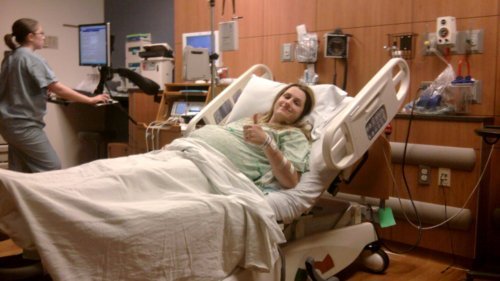
Around 0600 we found we ourselves in labor & delivery and things were really moving. The next cervical check showed a gain to 6cm in less than 90 minutes (typically, 1cm/hour is the benchmark). They broke Patty's bag, and then our OB showed up, at the end of his night shift to see how things were going. Patty was pretty sure at that point that she wanted an epidural, and after some discussion, we ordered it. It was right then active labor hit like an atom bomb.
As the contractions seemingly had no definable end or beginning, even coming on top of the last, the lab was delayed in getting the results of the blood work. Patty and I stood, arms interlocked, rocking back and forth there in the room. At first we were alone (she burst into tears when seeing the blood-tinged fluid accumulating on the floor between her legs), then amid doctors and nurses who made welcome lighthearted jokes about 7th grade slow dances and that, "it's not the cleanest of medical practices." They told us we were really working well together, using our coping skills expertly. Breathing and "ahhhhhhhhhhhh!"-ing our way through the worst pain Patty had ever experienced in her life, with me sternly reminding her to stay in control, and not give it up to the agony.
Relief
After what seemed like hours (in reality about 75 minutes) the epidural was approved and I was told I'd need to step out when it was administered. Anesthesia soon showed around 7:30, and I left for some cafeteria breakfast. Upon returning, it was as if I'd walked into the wrong room. Patty was lying peacefully on her side, the motor of the IV drip humming along soothingly. No one else was there.
The next cervical check at 0800 showed another gain, out to 8cm; as well as 100% effaced and at 0 station. We were ecstatic. Dr. Chen, the OB who would be delivering Baby Mo then said, "I'll be back in about 90 minutes. You should be feeling strong pressure on your rectum, and we'll be ready to push!"
I happily reported via text to family members that we could expect a new baby by 11am.

Stalled
The next cervical check indicated no change, so a small dose of pitocin was added. It was hard to interpret the monitor's contraction readout but it did seem as though the action had begun to slow. I then had lunch, watched a movie, but anxiety had begun to creep in. It was evident in Patty as well. Two more cervical exams revealed no change, and each time the pitocin dosage was slightly increased.
I warily noticed long intervals in between gently sloping contractions and Baby Mo's heart rate rising to the upper limit of normal, high 150s. Patty was also running a 101 fever, indicative of a possible uterine infection. The pitocin wasn't working like we wanted it to, and Patty and I were trying to work through a sudoku puzzle to calm ourselves when Dr. Chen walked in around 1420. Cervix was still at 8cm.
She told us that she was going to do a Cesarean-section procedure and would be back in a couple hours. If Patty made progress in that time, and felt the need to push suddenly, a midwife was on the floor who could deliver Baby Mo. If there was no progress, "we'd need to consider other options."
There was no delusion that "other options" was only one option.
I tried to not show my growing fear. Barely anyone wants a c-section and this was the dreaded end after 4 weeks of child birth classes and long discussions about delivery: cutting the chord, baby going straight to momma, maybe even standing birth. C-sections are far more common in the United States - nearly 40% of total births - largely because of the more medical/surgical nature of obstetrics in this country.
Dr. Chen returned by 1600 and when Patty told her that she felt some pressure, all of our spirits jumped. It could be the progress we were hoping for. A check of her cervix revealed, however, that we'd be going into surgery.
Not that we had any other choice. As I sat there, unable to speak while doctors and nurses came in to prep Patty for surgery and sign the necessary waivers, I couldn't find any regret for our course of action up to now. Four days of sleepless nights and painful contractions, breaking the bag, the necessity of the epidural...I wouldn't have changed any of it. If a Cesarean resulted from the chain reaction of interventions, then I could live with that.
It still didn't keep me from being scared shitless.
"I need you to stay calm for me"
I had 20 minutes alone in the labor & delivery room after they wheeled Patty away for surgery. I was to put on the scrubs they left for me, and wait for the RN to come and take me to the operating room for delivery. I sat there shaking and trying not to think about all the things that could go wrong with a very routine surgery on a women with a 101 fever and elevated blood pressure - not that I knew anything at all about surgery, except that when I was a little kid even M*A*S*H episodes used to scare me.
The RN was back to get me more quickly than I expected, and walking out with her to the OR was an out of body experience. I was watching myself as though I were a different person.
It was hyper-real. The operating room was as bright as a high school detention class. Not dark, like in M*A*S*H episodes, or in the movies. I didn't have to wash my hands, or go through an air lock. The voices and mannerisms of all the doctors and RNs oozed confidence and professional detachment while my ears were attuned to any reveal of something going wrong, through a shaky or hesitant word, or sharply issued order. I only heard deliberate footsteps, regimental dialog, and a few casual comments mixed in with the beeps and whirs of the surgical apparatuses all over the room.
A large green surgical sheet was up between us and the action and I could only see Patty from the chest up. Her arms were spread crucifix-like from her sides and she looked up at me - noticing my hurried breathing and darting eyes above my face mask - and with relaxed panic, said,
"I need you to be calm for me."
Catharsis
Those words were like an order from a general to a private as he was about to go around a wall into a hail of gunfire. I owed it to her to place my trust in the hospital, the doctors, in our own decisions that brought us to this moment. There was no going back, nothing I could do but face the situation for what it was. We were moments away from putting the last nine months behind us forever.
I stroked her cheek and just nodded, my eyes stealing in response. As I looked at the floor, deliberately slowing my breathing with deep draws from my diaphragm, I heard Dr. Chen say, jokingly:
"I think I'm more concerned about the dad than the patient!"
And then,
"Dad, you can stand up now!"
My knees straightened, my back became upright, and I watched the green sheet between me and the source of all the unseen activity move downward followed by its top edge and then the open space of the room...
I was looking at Baby Mo at the moment she was being pulled from the womb, 1656 hours on August the 3rd, 2011, covered in murky fluid and blood, unfolding from her fetal position, and held up for me to see by Dr. Chen, whose eyes were smiling brightly from behind her mask. I didn't consciously try to count 10 finger and toes, or two eyes, or see the quivering mouth, but when I heard her new, untested voice gurgling and then gaining strength into an angry shriek, I knew Baby Mo was with us to stay.
I didn't realize I was weeping until I felt the gush of tears down my face.
When I looked down at Patty she was weeping too, having watched my reaction, and then Baby Mo was whisked away to the side room for all the measurements to make sure she was, in fact, a live human baby, despite the confirming evidence of her continued bellowing and shrieking at the indignation at having been ripped naked from the only existence she'd ever known.
Vivian
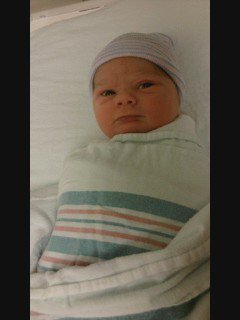
The relief continued to flow, morphing to joy, as I heard the OR staff laughing and joking approvingly at the healthy sounds of displeasure. The pediatrician was then waving me to come around and join him in the room for a first picture. Baby Mo was definitely a live human baby, all eight pounds, 4 ounces, and 20 inches of her, and named Vivian Rose Morrissey.
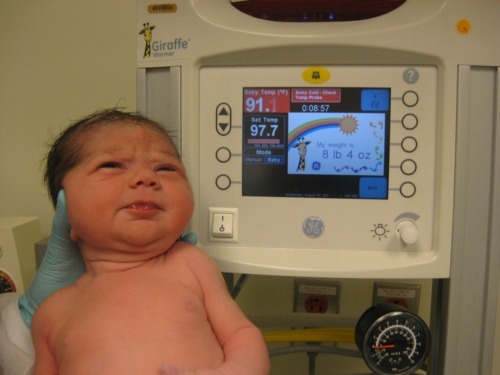
Patty was lying just as helpless in the next room, waiting for more than 15 minutes to finally touch the skin of her new baby. I was soon able to place Vivian in her arms before they moved them from the OR into recovery.
27.7.11
Thursday Hate

6.5.11
Going the distance for bike theft
The River Forest Police Department certainly didn’t let a lack of perceived property value get in the way of bringing bike thief Jose Bautista to justice.
Authorities were able to track down Bautista, a convicted DUI offender, with DNA analysis of the blood left on some broken glass at the crime scene. It took ten months to get the results back due to higher-priority violent crime cases, but it’s good to see that even bike thieves are not considered below the reach of such useful technology.
Anyone who’s ever had a bike stolen hardly considers it petty theft.
5.5.11
Thursday Hate: Stupid Mudder F***ers
4.5.11
Mettle to the Pedal
I can think of no better way to celebrate in Chicago than becoming a Team Leader for the Bike Commuter Challenge. Put your knowledge of practical and safe cycling towards growing the ranks of the healthiest, happiest, and most productive travelers around.
You know that a small amount of extra effort doesn't mean a loss of convenience, yet can save thousands of dollars a year. You know that if you could just get the chance to convince a few friends and coworkers, with others like you around the country, millions, perhaps billions of dollars could be saved in fuel costs, productivity, and the public health impacts of air pollution and sedentary lifestyles.
2.5.11
Looking down
But all of us will be feeling the pinch - if not now - sooner or later at the grocery store. For sure, one way to alleviate a lot of the pain is having that room in your budget instead of losing it to direct fuel costs. But soon formerly well-fed people will be going visibly hungry, and along with the news of high fuel prices, will be the news of growing starvation among the first world.
Since 1960 the population of Earth has been discovering one barrel for every four we consume. Some call it "Peak Oil Theory."
Actually, according to the International Energy Agency, and now the International Monetary Fund, it's reality.
When will we start noticing the fewer planes in the sky? The abandoned cars and trucks rusting in the streets? In ten years, who will be able to afford them? Each day, the dollar buys less and less, fuel becomes more and more expensive, because there is less and less net energy to fuel production of the goods and services that fuel our economy.
Any return to growth as pined for in the mass media is a self-delusional lie. We are headed into a new, heretofore unexperienced historical epoch of contraction. All of our economic growth was ultimately driven by the annual increases of available net energy...increases in energy production. But those increases in net energy are gone, never to return.
The "drill drill drill" gang is under the impression that North America has vast unexplored regions where oil is just begging to be discovered. This is not true. The New York Times reported after Obama's speech - in a disgracefully dumb story by Clifford Krauss - that the eastern Gulf of Mexico and Atlantic Coast contain 3.8 billion barrels of oil. Really? Hello! The US uses over 7 billion barrels of oil every year. Does the Arctic National Wildlife refuge contain between 4 and 11 billion barrels (US gov estimate)? Great, that averages out to about a year or so of US supply. And I'm not even against drilling there, only against the idea that it represents a meaningful "solution" to our problem.Meanwhile, the old standby Alaskan oil fields at Prudhoe Bay are depleting so remorselessly that there may not be enough flow in a year or so to move the oil through the famous pipeline.How about Canada's tar sands? Well, first of all, they belong to Canada, not us, unless we want to change that - and that could be politically messy. The tar sands will never produce more than 3 million barrels a day. The operations are already too huge, costly, and damaging to the northern watershed. Canada is our number one source of imported oil, but China would also like to buy Canadian oil. Are we planning to invoke the Monroe Doctrine to prevent Canada from selling its oil to parties outside the Western Hemisphere? That could be messy, too.
8.3.11
George Will hates trains
I occasionally enjoy your writings for the principled conservatism you express, but I found your February 27th contribution in Newsweek to be nothing but good, old-fashioned red-baiting at its most base:
"...the real reason for progressives’ passion for trains is their goal of diminishing Americans’ individualism in order to make them more amenable to collectivism."
High Speed Rail as is being pushed by the DOT and Obama is undoubtedly going to be wasteful, but don't use that to paint the entire mode of Rail. Rail is much more economical than driving in terms of fuel efficiency in $/passenger-kilometer, and the basis of the infrastructure is already there and just needs to be revived/updated.
Yes, if viewed as a purely government-funded exercise, rail is more expensive. But rail pays a greater percentage of its way through fares (62% of operating expenses) than driving does via gas taxes and tolls (less than 50% for the Federal Highway Administration).
Further, why is rail vilified for being subsidized by the government when the same can be said for our highways? Because its detractors can't let go of cheap gas (gone forever), and are deliberately comparing apples to oranges: on percentage of current mode-share vs. what is currently subsidized through taxes. Rail ridership grows every year, and track infrastructure with equal mode-share is much more economical than continued maintenance of interstate highways we can no longer afford.
Fighting "global warming" is an unwinnable battle but, rail also pays dividends in reducing pollution and improving public health. Why do you hate people's lungs, George?
There's no denying the $50-80 billion nationally per year in additional healthcare costs from transportation related pollution. To say nothing of the $150 billion in additional costs dealing with type 2 diabetes - a direct result of our car-dependent sedentary behavior.
The free ride of cheap oil is over, George. The airlines will soon be a millionaires club, and local travel and development will be increasingly more oriented towards transit, bicycling, and walking. The direct and indirect costs of a car-only transportation policy are simply too great to bear anymore. Roads are not an entitlement, and it's time to stop paying for them with the wallets of the middle-class and lower, as Scott Walker is doing in Wisconsin.
Your argument is bullshit and reactionary. You know this, so you just resort to the fossilized cliché of calling people "communists." It is your only defense against people who don't embrace the pointless consumerism of car-culture or the fallacy of "individualism" predicated on an endowment of cheap, convenient energy. Against those who place more value on public space, community, efficiency, and health.
American individualism is far older the automobile; it was born out of finding a better way of doing things.
2.3.11
Thursday Hate: Where is John Burge when we need him?
1.3.11
My email to David Brooks of the New York Times
I have recently become a big fan of your writing.
Your recent columns, "Ben Franklin's Nation," "Run, Mitch, Run," and "The New Normal," resonated with me greatly. Indeed, the middle class need to reclaim our dignity by distinguishing ourselves by what we spend on, rather than what we have to spend. I, too, hope for a measured approach in ensuring the inevitable austerity is less painful.
I suppose you might call me a progressive-realist. I work for a Chicago nonprofit that advocates for better biking, walking, and transit for our citizens. Not the typical resume of a Republican. And I don't identify as such, but I am a fan of Mitch Daniels.
Mitch Daniels played not a small part in the passage of Indiana's landmark Complete Streets bill late last year. Complete Streets is the concept that most new public roadway development considers all possible users. Daniels realizes there are great gains to be achieved by reclaiming a portion of the public space for the use of all.
These are gains in energy efficiency, quality of life, and public health that will positively affect the bottom line of governments across the land.
Our current infrastructure, heavily car-centric, is much like a third-rail entitlement program, eating up increasingly more of the budget and creating dependency (on low energy prices).
Several recent studies have shown the huge dividends of investing in bicycling, walking, and transit-oriented development, especially in fuel savings and lower public health burden.
The American Journal of Public Health reported last November - covered by NPR - that in cities with high rates of active transportation, obesity and diabetes rates are 20% lower or more. Treatment of type 2 diabetes claims $1 in every 100 dollars spent in this country, and each sufferer can incur additional lifetime healthcare costs of up to $400,000. One in three born after the year 2000 will contract it.
A brand new study by the Journal of Physical Activity and Health found that by 2040, bicycling investments in Portland, OR in the range of $138 to $605 million will result in health care cost savings of $388 to $594 million and fuel savings of $143 to $218 million.
Finally, the Chicago Tribune reported that the city's Bike 2015 Plan is indeed working: they've built the lanes, and the cyclists - finding increased safety - have come. Business Week cites findings that such infrastructure cuts cyclist injuries by half. Mayor-elect Emanuel has pledged to increase the rate of bike lane development in Chicago from 8 miles per year to 25, and has promised to open the Bloomingdale Trail - the sister of NYC's much celebrated and successful High Line - before the end of his first term.
It is my hope that you will weigh in with your support on these solutions that Indiana, Chicago, and many other towns across America are implementing to cut loose the stranglehold that car-only infrastructure has on their budgets, their health, and their public space.
Thanks for reading.
21.2.11
On Wisconsin (so go the rest)
Only 5 states do not have collective bargaining for educators and have deemed it illegal. Those states and their ranking on ACT/SAT scores are as follows:Where it starts to get really ugly is when the lies quickly get mixed up with the facts. Indeed the Wisconsin state unions offered concessions with their pensions and benefits as an alternative to losing their collective bargaining power. Indeed Governor Scott Walker ignored those offers of negotiation and is now attempting to legislate their collective bargaining rights out of existence. Indeed, the police and firefighters unions who were spared their right to collectively bargain on the virtue of their previous endorsement of Walker have now rebuked him in support of their brethren.
*South Carolina -50th
*North Carolina -49th
*Georgia -48th
*Texas -47th
*Virginia -44th
Wisconsin is #2 in ACT/SAT scores. Re-post if you think this is important.
But, a claim is now also making the rounds that Wisconsin actually had a budget surplus and that Walker has engineered the crisis to pay for his corporate tax-breaks.
It's bullshit.
The figure being cited by Rachael Maddow and her sycophants omits over $200 million owed to state programs ("But ignoring it would have meant turning away eligible Medicaid clients, which was not an option..."), and could be an additional $200 million in the red if additional debts are figured in, pending a court ruling. As well, the hits from the tax breaks won't hit for another two years.
Scott Walker is specifically targeting the collective bargaining rights of state workers because he knows what the people repeating these memes and distortions do not: that the overall financial pie is getting smaller and will continue to do so. Targeting the strength of these workers to negotiate their earnings is the Right Wing's longer-term strategy for holding on to their total volume of resources, versus keeping merely their share, relative to the rest. The growth simply isn't there to support the infrastructure we've built for ourselves over the 20th century without cannibalizing - as in this case - functions deemed "less essential."
The proof is in the "fine print" as the JSO notes with regards to the Medicaid debt. Those arrears were obviously deemed "least essential" by the state, until it was evident they couldn't get out of paying those debts, legally. So, the plan then became: make up the difference by screwing those who can be screwed legally. Only "screwing" isn't exactly a mandate and now we have the present situation in Madison on Capital Hill - mobs of protesters eating in the cafeteria intended for the politicians, who - Democrats anyways - are on the lam to prevent a quorum from being established to vote on the pending bill.
This explanation leaves some bigger questions hanging, and to answer those we need to look at the bigger picture. Why isn't there growth to support the debts being incurred by Wisconsin, and of course other states, including Illinois? This lack of growth is evident globally, in fact. Look at what's going in the Middle East due to fuel and food shortages, as well as the riots in Greece, The UK, and France earlier last year in response to very similar budget tightening measures.
The pie, as I mentioned, has been getting smaller every year since global oil production peaked in 2006 (even the Wall Street Journal acknowledged the premise in 2008, and the IEA declared it so last year.) This is a very...big...problem, and what we are seeing in Wisconsin and world wide is just the beginning of the reprecussions.
At the core of it is the following paradox: a global financial system predicated and fully dependent on constant growth to pay the debts incurred by the creation of wealth, driven by loans, yet fueled by a finite resource. Yes, that growth comes from (came from, sorry) the increasing net energy available to us, through energy production. It's what made us as a society more productive each year.
Oil accounts for 40% of the world's total energy needs and simply replacing that energy through other means without considering the effects of the cascading consequences is pure folly. Not the least of which is that all of the infrastructure changes required to make such a shift are still dependent on an oil-based system. And others, such as Bush's "hydrogen economy" are pipe-dreams, net-energy losses.
And most basically, the fact that no other fuel comes close to conventional oil's efficiency and convenience. Billions of years of sunlight, locked up in a drivable, flyable, shippable, pipeline-able package, all at our convenience.
And finally the election of Scott Walker, et all. They will deliver scapegoats and the promise of the status quo. Not the painful truth.
It's like a trust fund kid who's money is running out and has to take the bus from now on.
Contraction is coming, in a big way. We've far overshot the natural carrying capacity of our environment - artificially inflated by the energy from fossil fuels, a once-in-a-planetary-lifetime shot, and we've squandered it in little over 200 years.
I know that I have only seen it rain
That never has it stormed within my path
I read the pages, looking at the pain
And heard the ruminations on God's wrath.
I cow'r in fear to dwell upon my fate
That's been foretold by corpses walking past...
They cackle at my slick-skinned naivete
With toothless leers and bony fingers crossed.
Expensive clothes and robes now turned to mold
Rotten, sour agelessness of excess
To be undone by no amount of gold -
Illuminating only scars and sadness.
While great swaths of fire, birthed by lightning,
Clear the remains of every living thing.

4.2.11
Dib this

15.12.10
Reclaiming sense and sustainability
The middle class is a segment of society that has simultaneously grown exponentially worldwide and diminished greatly in stature here at home. A matter of relative perspective, Brooks explains. There are simply more of them, and less of us. While no longer as powerful in their ability to set national priorities, the American middle-class is not yet "eating cake." They simply aren't as distinguished amid so many others.
The middle class - and the United States - have been derided as "tepid and materialistic." In fact, those are the very traits – while stoked and exploited by those with more means – that have led to its nadir. The foreclosure crisis and the looming hammer of debt above are both underwritten by our continued dependence on ever-increasingly expensive fossil fuel; and it has whittled away our disposable income to point of seething anger and blind rage.
However, redemption is not impossible.
Ben Franklin, Brooks reminds us, was one of the original champions of the middle class. While superficially defined as having the means to spend on non-necessities, Brooks explores its deeper values of quality over quantity, of pluralism, innovation, and objectivity. In other words, distinguishing ourselves by what we spend on rather than by what have to spend. Or knowing what is simply not necessary.
"American culture was built on the notion of bourgeois dignity." This dignity is being rediscovered by overcoming the epidemic of obesity and chronic disease wrought by car-centric sprawl and the commoditization of our health and nutrition. It will be reclaimed by standing up and refusing to be marginalized by a lack of transportation options and infrastructure that ignores a great many people's needs and forces them into near-servitude.
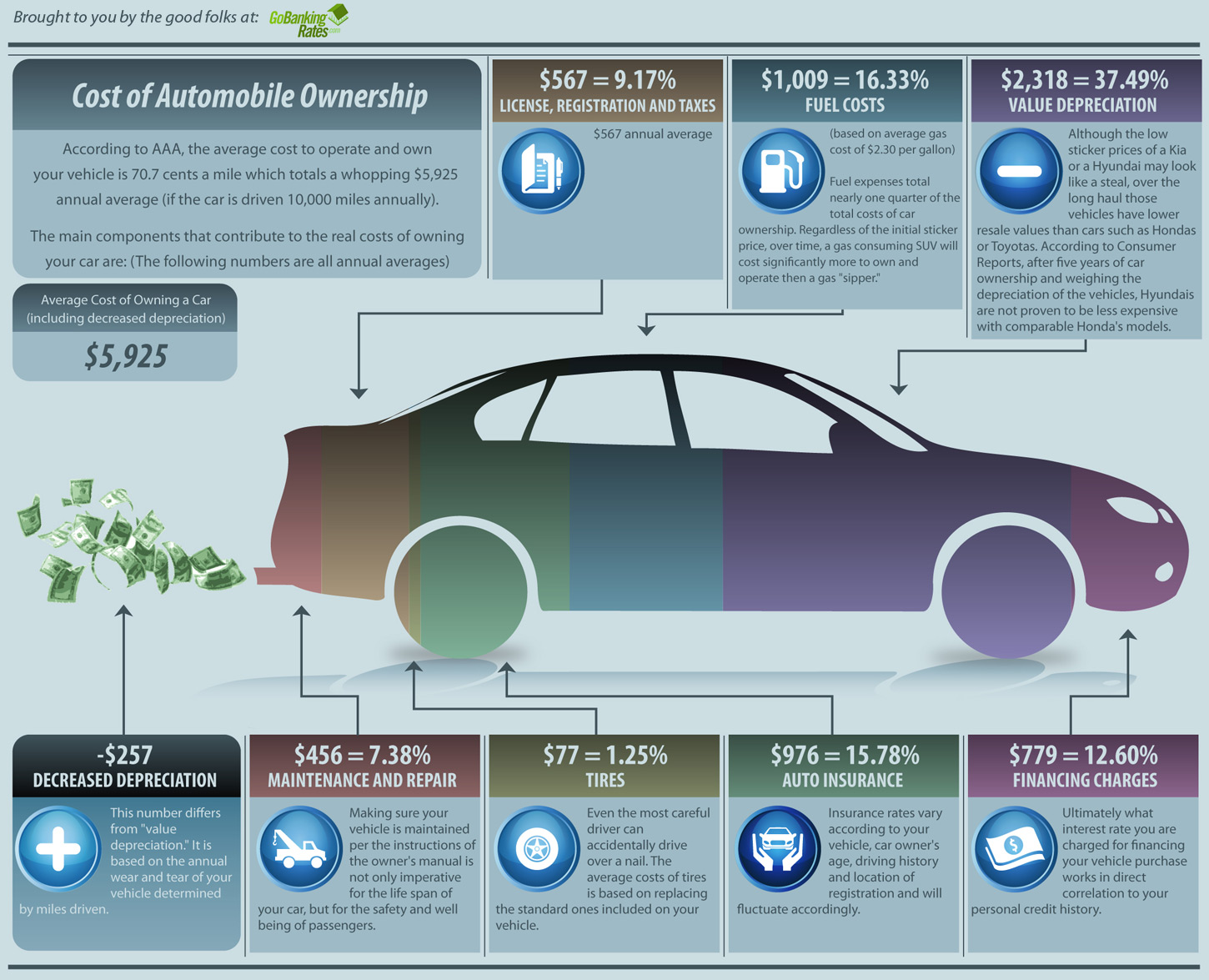
Many Americans go into debt because they feel they must own a car, even while 37% of the money they spend on it is lost to depreciation.
Diabetes and its complications claim one in every five dollars spent on healthcare in this country. This "lifestyle" disease is the reason why so many of us cannot afford health insurance and it is now beyond any doubt that urban sprawl and its drive-only mandate bears much of the blame. Not only because it robs us of the time spent moving our bodies, but of the time spent preparing quality meals and sharing them with quality people during quality time. Robbing us of the expendable income to spend what is actually necessary.
I see a revolution of holistic self-sufficiency and the abandonment of suburbia. Robust transit systems that complement streets which welcome walkers and cyclists along with manageable and safe traffic flow, encouraging efficacy, commerce, and vibrant community will diminish our crushing debt and nihilistic consumerism. Rather than spend two hours a day in the car, then obsessively jump on a treadmill after grabbing take out, the new middle-class will simply bike to work or walk to the train, and have the time afterward to enjoy a real meal with family or friends.
Fewer teens are getting a driver’s license than at any point in the last 25 years.
Measured austerity and real sustainability (as opposed to the "greenwashing" of hybrid cars, wind powered parking garages, and carbon credits – i.e. bullshitting ourselves) will come to define the middle-class in the very near future. It will be the one characteristic that gives them back the power they once had.
Not the power to buy or own what it neither needs nor can afford, but to free themselves of the compulsion to do so.
29.11.10
Food Choices
"This is our charity. This is my giving to the world," says Alexandra,finally, as she packs lunchboxes—organic peanut butter and jelly on grainy bread, a yogurt, and a clementine—for her two boys. "We contribute a lot."
This is not just self-congratulatory masturbation. The "savings" of cheap food, brought about by way of equal amounts of cheap oil, are in reality buck-passing. Those "savings" are borne by the public in the form of healthcare costs (11% of which treat type 2 diabetes alone), pollution, and even directly out of our pockets in the form of subsidies for those "cheap" and very empty calories.
It seems self-defeating to give to charitable public health concerns while at the same time compounding those very problems with your own lifestyle choices. Instead, spend the extra on sustainably-produced foods that have far less negative impact on public health
23.11.10
Awww, poor baby!
This is a nation so lazily and vociferously addicted to oil, believing that driving everywhere is a civil right and a way of life that they voted for George W Bush, twice, and his gigantic expansion of our already unwelcome presence in the Middle East to outright war. Not that we’d have avoided war with another president, not without changing our ways. Obama is proof of that, ineffectiveness incarnate. But by electing Bush and a propaganda machine, we convinced ourselves we could go on living as we always have, with the small inconvenience of ensuring that our Middle Eastern oil supplies aren’t endangered by Chinese or Russian intervention by intervening ourselves.
That’s the cost of “freedom,” right?
Do you really think that we’re still in Afghanistan to ensure democracy? US combat operations in Iraq may be over but our occupation is not. Do you really think that the weapons-of-mass-destruction-fiasco was just an honest error in intelligence and judgment? You are stupider than your Hummer makes you look.
Do you really think that we’re there to “steal oil?” You are stupider than your Prius makes you look.
We are awaiting the inevitable: the supply crunch. Soon there will not enough available energy at affordable prices to go around among Europe, China, Russia, and the US. It is then our Asian mission will be realized; and once it is, the terror threat will recede far into the background. If you think all parties involved will politely negotiate their way to an agreeable resolution to this shortfall, you are stupider than your protest sign makes you look.
Until then, terrorism is the most visible consequence of our oil addiction, and we bitch and moan about the TSA “abuse” with zero sense of irony. By simply reducing the amount we drive through means theoretically within our grasp we could totally eliminate our dependence on any foreign oil and any need for energy-defense missions. Most trips fewer than two miles could be made by some other mode than automobile. Why do you need so much shit from Target at one time? Why do you need such a huge truck? Can’t you drive something with better mileage? Why can’t you live in a denser area that is closer to transit?
These are all choices that you can make. However, if you have chosen to live in the suburbs and more than 2 miles from your nearest food source, voted for the candidate who cut funding for transit, or would rather drive because the bus “is for losers,” then I don’t want to hear anymore complaining about being turned into a creepy, 3D, black and white centerfold or having your genitals touched by a glorified security-guard no more qualified to be a garbage man and probably paid half as much.
We have only our own selfish behavior to blame. We're losing essential liberty for a little convenience. 300 million people changing a little can change a lot.
11.11.10
Thursday hate
Someone who asks me for advice but is really only looking for validation on what he's already decided on doing.
People who must get past you to the doors while the train or bus is still moving, especially during rush hour; making me get up or contort to let them pass, risking a fall. I promise you will not miss your stop. And if you do, it won't be the end of the fucking world.
4.11.10
Thursday hate
10. Litterers.
9. People who block the doors.
8. Eric Cantor.
7. People who start with "www dot..." when giving you a web address.
6. American soccer fans who hate all other American sports.
5. People who go apoplectic against cutting social services but don't have a library card.
4. Litterers littering energy drink cans get an extra.
3. People who blame the imminently approaching economic abyss on liberalism and over-regulation.
2. People who won't eat vegetables, but they'll have their own problems.
1. "I said, 'please move your bag.'"
3.11.10
Humped Day: we deserve it
More mental heath care for veterans is great, it truly is. So is preventing providers from excluding pre-existing conditions upon new employment. These provisions would've been easily passed with bipartisan support. This is the kind of change people wanted.
The added entitlements of insuring millions of needy Americans who cost the most to treat because they suffer from chronic disease due to poor diet and lack of exercise, caused by government policy that was left completely untouched, was not the change people wanted. And the fact that it was passed without ANY bipartisan support at all has some people rightly pissed.
Especially after they just finished paying over $700 billion, instead of lining each of those motherfuckers up against a wall and putting a bullet in their brain, to the Wall Street criminals who fleeced the taxpayers that had any money left after they hatched a scheme to sell mortgages to people who couldn't afford them, then bundled them up in fraudulently-rated securities and sold them again, while taking out insurance policies on all of them - those millions and millions of little financial hydrogen bombs, credit-default-swaps.
Who's to blame? Probably Republican Phil Graham for sponsoring the 1999 bill which repealed part of the Glass–Steagall Act of 1933 and removed the wall between commercial and investment banks, or the current standard-bearer for modern Democrats, Bill Clinton, who signed it. Take your pick.
But Barack Obama passed financial reform, you protest? Big fucking deal. Too late, the horses are already out of the barn. The accumulated debt at the core of it all - mortgages owned by people who couldn't pay them - debt that was greater than our combined ability to pay it, caused it all to fall apart. We got stuck with the bill and the world would end if we didn't pay.
This may not have come directly out of our pockets, but in the coming years, as our schools get worse, more bridges collapse, and ever-more reactionary politicians rescind funding for rail and complete streets infrastructure and planning, the criminality of it all will become very apparent.
The world, as we know it, is still going to end.
And this is what pisses me off the most: there is not one word about what the fuck Obama has done for sustainable transportation. The planning and ideas coming out of our Department of Transportation are the most innovative in years, former Republican Illinois state senator Ray LaHood is doing incredibly great work. And it may all be squandered by Obama breaking his word on being a bipartisan reformer. Not all conservatives are entirely beholden to special interests, some just think entitlement spending has gone too far. And when we're spending money to insure unhealthy people without first addressing WHY they are unhealthy, I think that's a good reason to say no.
And now, because of it, very real planning and the few good ideas to come out of this administration so far - transportation mitigating our dependence on cars - are at risk of being cut. In many states, such as Wisconsin, it's already on the block. And amid the permanent energy crunch that is being direly predicted in the coming years, we'll again be left forking over many more millions to pay for this next, now permanent, emergency.
And the folks who reacted to Obama's ineffectiveness will react the same way to these new Republican's ineffectiveness, by voting in even more reactionary politicians. All very sad, because our downfall is completely out of any politician's control. They will make Joe Miller and Sharon Angle (and her vague threats of "2nd amendment remedies") look like Jimmy Carter and Walter Mondale.
Bookmark this blog entry. Title it, "was Brian right?" Come back in the fall of 2012 and see if we aren't ruing our continued dependence on cars and suburban sprawl. And I'm very sorry that your feelings are hurt because a bunch of gun-wielding insurgents got voted into office around the country yesterday, but that's what you get when you don't take other people's opinions into account.